Kitchen packing services in Tasmania
Leave the time-consuming kitchen cupboards to a clear packing plan. Ask for help with crockery, glassware and agreed contents while keeping your everyday essentials available.
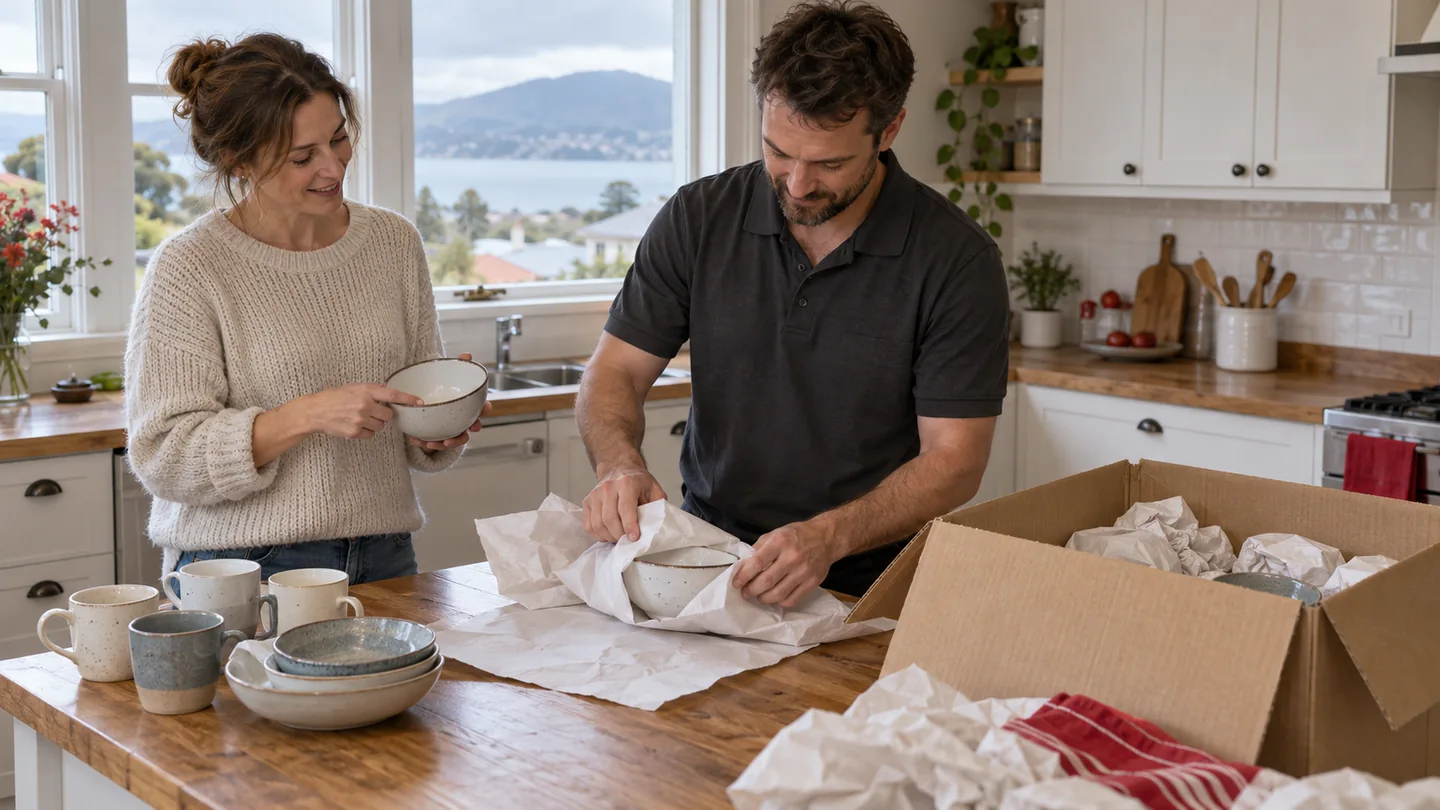
Give the kitchen its own packing plan
The kitchen can look nearly finished while there are still three cupboards, a drawer of utensils and a shelf of glasses to go. If you would rather spend that time on the rest of the move, ask Tas Removals & Storage about help with the kitchen contents you want packed.
Our kitchen packing services in Tasmania can be discussed for selected cupboards, fragile kitchenware or the room's agreed contents. You might pack the bedrooms yourself and leave the crockery, glassware and small appliances to the packing team. Tell us what you use every day, what is moving and when the kitchen needs to be ready for collection.
A kitchen-only packing enquiry sits within our Tasmania packing and unpacking services. It gives you a way to ask for practical household packing help without automatically including every room. If you need only particular delicate pieces prepared, our fragile-item packing service guide helps you describe that smaller job.
Selected cupboards
Name the areas needing help, such as the crockery cupboard, glassware shelves and drawers of utensils.
The agreed kitchen contents
List cookware, small appliances and pantry items as well as the breakables. Identify what stays with you.
Packing and unpacking
Ask for the kitchen work at each address, including which everyday items you want accessible first.
Show us what is inside the cupboards
Photos of open cupboards and drawers are often more useful than a photo of the kitchen from the doorway. Include shelves above the fridge, the pantry, appliances kept in the laundry and the serving dishes you use only occasionally. A small room with full cupboards can involve more packing than a larger kitchen with little in it.
For a kitchen packing quote, group the contents in a simple list. Exact measurements matter most for oversized, heavy or unusually delicate pieces; a sensible count gives the team a starting point for everyday plates, glasses and mugs.
On a small screen, swipe or scroll sideways to read every column.
| Item group | Useful details | Preparation to discuss |
|---|---|---|
| Crockery and serving pieces | Plates, bowls, platters, loose lids, handles and existing chips or repairs. | Individual protection, cushioning and suitable carton sizes. |
| Glassware and mugs | Approximate numbers, tall stems, thin glass and unusual shapes. | Separation between items and protection for vulnerable parts. |
| Cookware and utensils | Pots, pans, baking trays, cutlery, sharp knives and loose attachments. | Weight distribution, protected edges and keeping parts together. |
| Small kitchen appliances | Make or model where useful, dimensions, detachable parts and original packaging. | Clean, dry preparation and any manufacturer packing instructions. |
| Pantry contents | Food you intend to keep, open packets, glass containers and liquids. | What can travel, leak prevention and destination restrictions. |
Point out sentimental china, fine crystal, large ceramic dishes and anything already cracked or repaired. Those details can change the protection needed. Put cleaning products, aerosols and other unusual contents on a separate question list rather than mixing them into the food and crockery inventory.
Crockery, glassware and appliances need different preparation
Good kitchen packing begins with the item and the trip it will make. Ordinary plates, stemmed glasses, a heavy mixer and a delicate serving bowl should not all be treated as the same load. The packing team needs to know what is fragile, what is heavy and which parts can move independently.
For crockery packing and glassware packing, discuss individual wrapping, cushioning and separation so hard surfaces are not rubbing together inside a carton. A “fragile” label helps identify the contents; it does not replace suitable protection. Avoid packing a large box simply because it can hold the whole cupboard.
Keep lids, appliance bowls, beaters and other attachments identifiable. Empty and clean appliances before the visit, allow them to dry and provide the manufacturer's instructions where they affect transport. Describe any electrical appliance that is fixed in place or needs a trade to disconnect it. Packing cupboard contents and disconnecting a built-in appliance are different tasks.
Ask what moving boxes, packing paper and protective materials are included, and whether your own cartons are suitable. Our packing materials and carton sizes guide explains the wider supplies enquiry. For a fridge or washing machine, use the separate whitegoods moving preparation guide and follow the appliance's instructions.
Keep a small kitchen kit available until you leave
Before the packers start, choose what you will need for the final night and the first morning at the new home. A couple of mugs, everyday plates, cutlery, a tea towel and the kettle may be enough. Keep that small kit apart from the cupboards being packed, with a clear instruction that it stays with you.
If children need lunchboxes or particular utensils, include those too. Decide what you will use to wash up and prepare a simple meal. The aim is to avoid reopening completed cartons because everything needed for breakfast has already been wrapped.
Set aside medicines, important documents, keys, valuables and personal items before the packing visit. Check the items to keep out of a removal load guide if you are unsure about cleaning products, restricted goods or food.
For chilled food you carry yourself, make a separate transport plan. The NSW Food Authority's advice on keeping food cold in transit recommends using an esky or cooler bag with ice or ice bricks. A kitchen-packing booking should not be treated as refrigerated food transport.
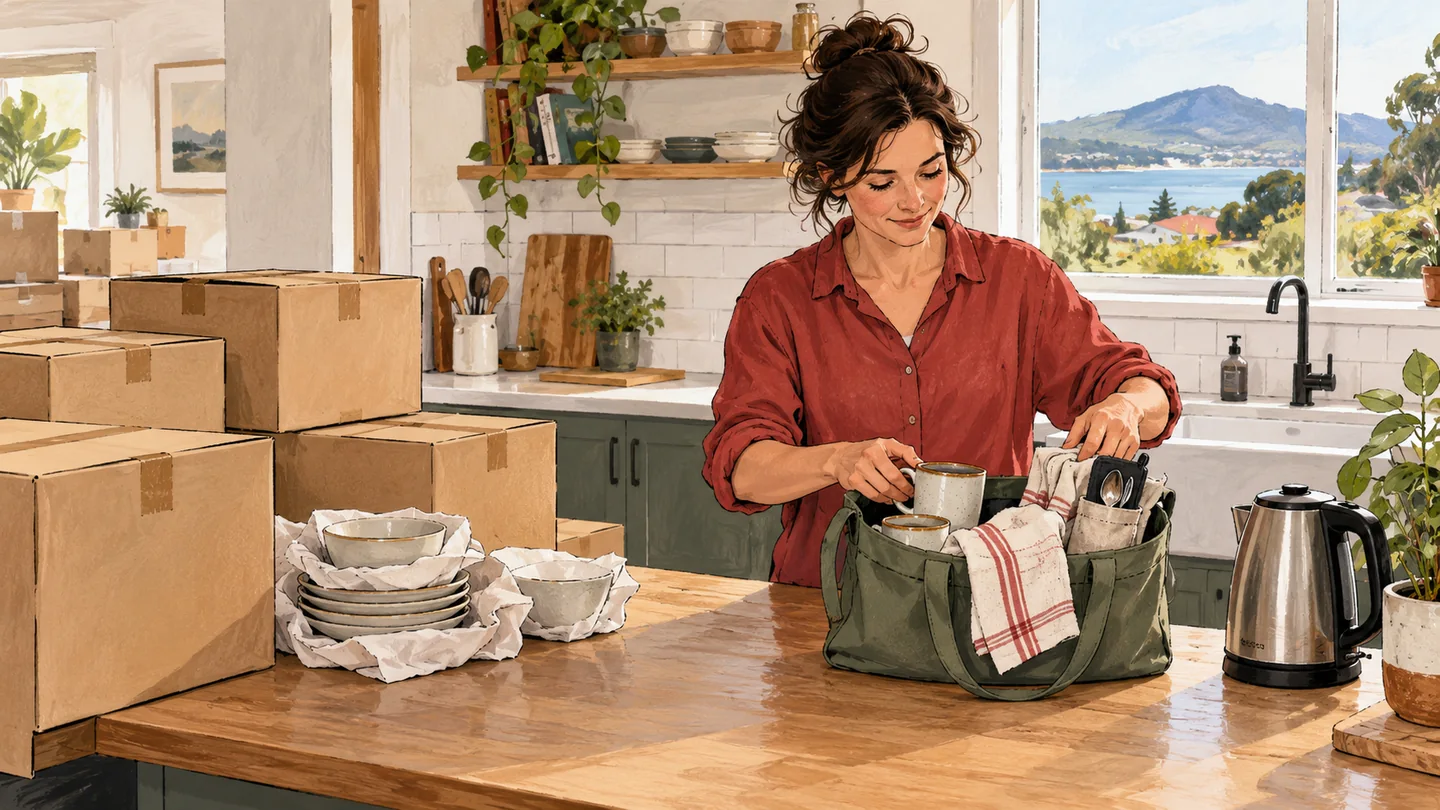
Decide what pantry contents will make the move
Go through the pantry before the packing appointment. Separate what you will use before leaving, what can be donated or discarded and what you want considered for the load. Tell the team about opened packets, liquids, oils and glass jars so the transport instructions can be checked before anything is sealed in a carton.
Food, plants, animal products and outdoor items can have entry restrictions when moving interstate. If your household goods are entering Tasmania, follow Biosecurity Tasmania's moving guidance, including the personal effects declaration for a permanent move. Our household biosecurity preparation guide connects those checks to packing.
For goods leaving Tasmania, check the destination's requirements and tell the team where the load is going. Do not assume an item accepted for one trip is suitable for another. Clear pantry decisions also help when belongings will spend time in storage; mention food and liquids before agreeing what will be stored.
Make the packing visit work around your household
Give the packing date, furniture collection date and the time you must hand over the old home. Say whether you still need to cook after packing or whether the kitchen can be finished earlier. Tas Removals & Storage can discuss the visit alongside your removal so the preparation and collection fit together.
Leave a clear work surface and access to the cupboards being packed. Keep the route through the kitchen usable, and arrange somewhere for children and pets away from the work. Identify food, essentials and items staying behind before the team arrives; moving them out of the way halfway through the visit takes time.
For Hobart packing and unpacking services, include parking, stairs and apartment access where relevant. For Launceston packing and unpacking help, give the same practical details about your property. Enquiries in Devonport, Burnie or regional Tasmania should include the suburb and dates so the visit can be discussed for that location.
If you are doing the rest of the household yourself, our Tasmania packing timeline helps you place the kitchen work in the wider move. Tell the team which cartons are already packed and which cupboards are still part of the requested service.
Pack for the kitchen you will use at the other end
Labels should help the receiver find things, not just say “kitchen” on every box. Use a room name, a contents group and a carton number: for example, “Kitchen 3 — everyday bowls and plates”. Mark the first-use cartons separately and keep a brief list of what is inside them.
Our box labelling and inventory guide helps connect the packed contents to delivery. Identify cartons you packed yourself and those prepared by the team, particularly when a fragile-item service covers only part of the room.
If you would like help opening the kitchen cartons after delivery, read our unpacking services in Tasmania guide. Tell us whether you want contents placed on a clear bench or selected items put away in agreed cupboards. That detail belongs in the unpacking request, alongside the destination address and timing.
For a gap between homes, explain which kitchen items will be kept with you and which can remain packed. Our packing for storage guide covers the wider preparation for that stage.
Example: pack the kitchen while you finish the bedrooms
Imagine a household moving from Launceston to Hobart. The family has packed clothing and books, but wants help with two cupboards of crockery, glassware, cookware and a mixer. A kettle, two mugs and breakfast utensils stay out until the final morning. This is an illustrative example, not a completed customer job.
The enquiry includes cupboard photos, the mixer and its attachments, both addresses and the collection date. The quote identifies the kitchen contents to pack and the materials needed. Carton labels distinguish everyday kitchenware from occasional serving pieces, while the essentials kit travels with the family.
That small amount of preparation makes the request clear: the team is being asked to pack the named kitchen contents, while the family finishes the other rooms. If unpacking at the Hobart home is wanted too, it is added as a separate destination task.
Ask Tas Removals & Storage for a kitchen packing quote
Send the suburb, preferred packing date, collection date and photos of the cupboards and drawers. List fragile items, small appliances, pantry contents and anything you are keeping out. Tell us whether you need materials, transport, storage or unpacking as well.
Kitchen packing costs depend on the amount and type of contents, the protection needed, materials, access and the work requested. Ask how labour and materials are priced and what happens if more contents are added. If you are comparing quotes, check the same items and tasks in each one.
You can begin with photos and a short list rather than counting every teaspoon. Call 03 6343 4698 or request a kitchen packing quote, and tell us which part of the kitchen you would like help with.
Questions about kitchen packing services
Can I book packing help for just the kitchen?
You can ask for selected cupboards, fragile kitchenware or the agreed kitchen contents while packing the rest of the home yourself. Send photos, the item groups and dates so Tas Removals & Storage can quote for the work you need.
What should I include in a kitchen packing enquiry?
Include crockery, glassware, cookware, utensils, small appliances and any pantry contents you want considered. Identify unusually delicate pieces, existing damage, loose parts and items staying with you. Open-cupboard photos and a simple list make the enquiry useful.
Are moving boxes and packing materials included?
Ask which cartons, packing paper and protective materials are included in your quote, and how additional supplies would be charged. If you have your own boxes, discuss whether they suit the contents before the packing visit.
Can I keep using the kitchen after it is packed?
Keep a small essentials kit apart before the team starts: mugs, everyday plates, cutlery, a tea towel and anything needed for simple meals. Explain which items must stay available and when the remaining kitchen contents can be packed.
Can pantry food and cleaning products go in the cartons?
Check these with the team before packing. Food, liquids, cleaning products and aerosols can have different transport requirements, and interstate destination rules may apply. Plan chilled food separately rather than assuming the household load provides refrigeration.
How should small kitchen appliances be prepared?
Empty, clean and dry the appliances, keep detachable parts identifiable and provide original packaging or manufacturer instructions where available. Mention heavy mixers, unusual shapes and fixed appliances. Disconnection or trade work should be discussed separately from cupboard packing.
Can kitchen unpacking be requested at the new home?
Include the destination address, timing and the tasks you want after delivery. Explain whether contents should go onto a clear bench or into identified cupboards. Unpacking and packaging removal need to be included in the quote if requested.
How much does kitchen packing cost?
The quote depends on the amount and type of contents, fragile-item protection, materials, access and requested tasks. Cupboard photos, an item list and dates help describe the work. Ask how labour, materials and additional contents are priced.
Get the kitchen ready for moving day
Send the cupboard photos, dates and the contents you would like help with. Tas Removals & Storage can discuss kitchen packing alongside your removal, storage or unpacking enquiry.
Prefer email? Send your item list and photographs to info@tasfurnituretransport.com.au.
Useful services and moving guides
Packing and unpacking services
Discuss selected rooms or a wider household packing request.
Unpacking services
Plan the first-use kitchen items at the destination.
Packing materials guide
Check cartons and protection for your contents.
Prepared for Tas Removals & Storage, 14 October 2026. Official resources linked in this guide were checked during preparation.