Fragile-Only Packing in Tasmania: Help With Selected Items
Pack the everyday belongings yourself and enquire about help with selected fragile items. Define the packing scope, suitable materials and a clear handover for your move.
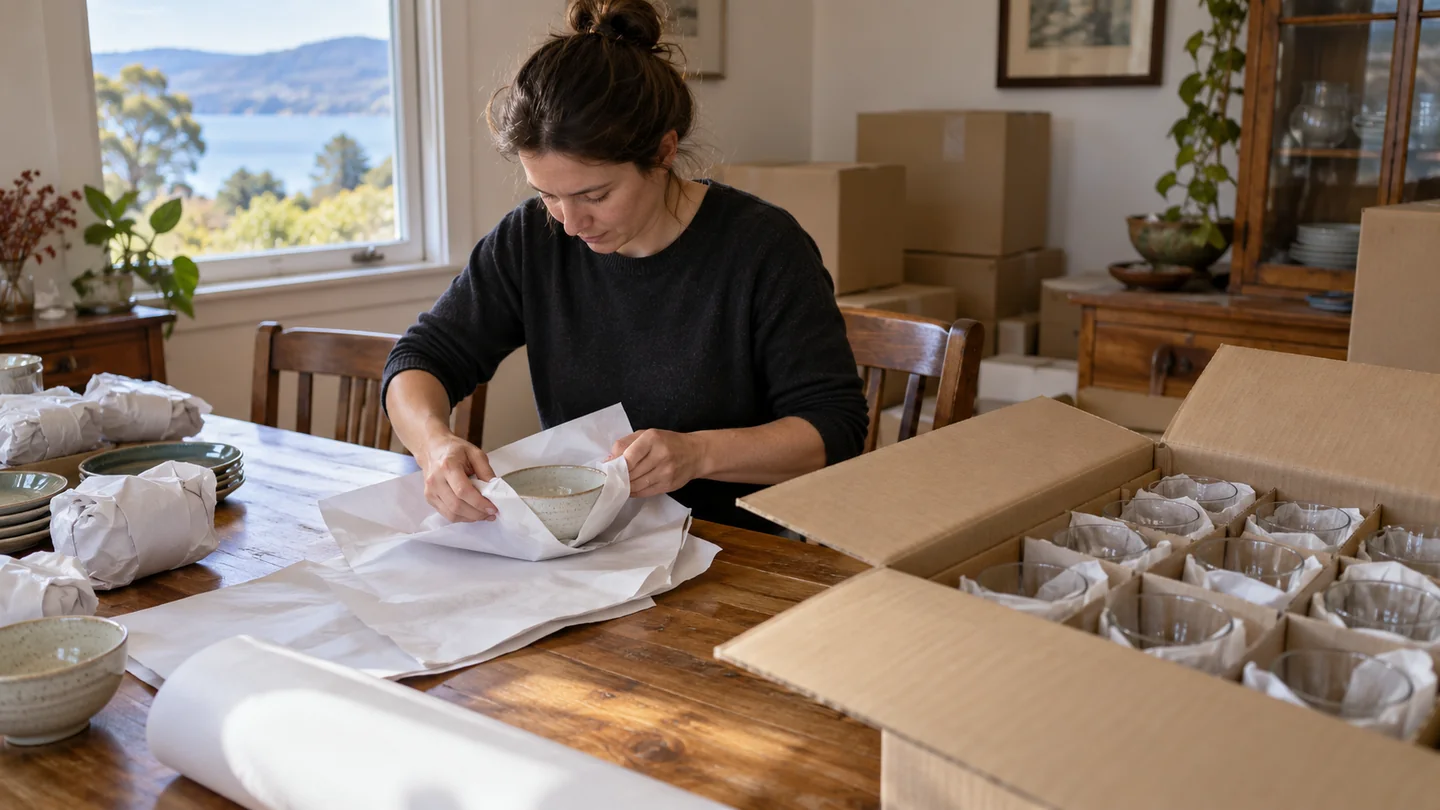
Pack most of your home yourself and ask for help with the fragile items
Fragile-only packing means agreeing on selected delicate belongings for packing assistance while you prepare the rest of the household. The scope might include kitchen glassware, crockery, ornaments or particular framed items, rather than every room in the home.
A few cupboards of glasses can need more preparation than several cartons of clothing. Describe the fragile load when enquiring about packing services in Tasmania, including the item types, quantities, condition and proposed moving dates. Tas Removals & Storage can discuss selected-item packing as part of the job and confirm availability, materials and handling requirements.
This guide helps you define partial packing assistance and the handover between items you pack and items you ask the team to prepare. For general supplies, see our packing materials and carton guide. For a broader packing and unpacking arrangement, use pre-packing and unpacking services.
Select the items
List the glasses, ceramics, pictures and other delicate pieces needing help. Include quantities, sizes and any existing weakness or repair.
Agree on the scope
Confirm who provides materials, which items will be packed, when the work happens and whether loading or unpacking is included.
Keep the handover clear
Identify professionally packed cartons and your own packed goods. Keep both groups connected to the final moving inventory.
Fragile-only packing, selected-room packing or a full-home pack?
Choose the work you actually need rather than relying on a general label. “Pack the kitchen” may include appliances, pantry contents and cookware as well as delicate dishes. “Pack the fragile kitchenware” is a narrower brief, but it still needs an item list and an agreed boundary.
On a small screen, scroll sideways to read all three columns.
| Packing scope | What the brief covers | What to clarify |
|---|---|---|
| Selected fragile items | Named groups such as drinking glasses, crockery, ornaments or particular framed pieces. | Exact quantities, item assessment, materials and what you will pack yourself. |
| Selected rooms or cupboards | The agreed contents of particular areas, such as a kitchen or study. | What is excluded, preparation needed and whether non-fragile contents are included. |
| Full-home packing | A wider household inventory across the rooms and areas agreed in the booking. | Time, materials, unusual items, essentials and any separately arranged work. |
Ask whether the packing visit will be coordinated with your removal booking or can be arranged separately. Confirm availability and the proposed sequence before setting a date. Loading, furniture transport, storage and unpacking are separate parts of the job unless the written scope includes them.
For a local move, supply the collection suburb and delivery address. For an interstate relocation or a period in storage, explain that plan too. Handling stages and the length of time belongings remain packed can affect the materials and preparation that need assessment.
Which fragile belongings should you flag for assessment?
Start with objects you would be uncomfortable packing without advice. Group ordinary household glassware and crockery separately from unusually delicate, large, valuable or previously damaged pieces. Some items need a specific packing or handling arrangement beyond a routine household carton.
On a small screen, scroll sideways to read all three columns.
| Item group | Information to provide | Preparation to discuss |
|---|---|---|
| Glassware | Glass count, tall stems, unusual shapes and any thin or repaired pieces. | Individual protection, separation and a suitable carton arrangement. |
| Crockery and ceramics | Plate and bowl quantities, serving pieces, handles, lids and existing cracks. | Support for vulnerable parts, cushioning and separation between items. |
| Ornaments and keepsakes | Dimensions, protruding parts, loose components and previous repairs. | Whether individual packing, extra support or a separate assessment is needed. |
| Framed pictures and mirrors | Size, weight, glazing, frame condition and whether surfaces are exposed. | Suitable surface, edge and corner protection and the proposed handling method. |
| Electronics and screens | Model, size, available original packaging and manufacturer instructions. | Appropriate packaging, cable identification and any preparation you must arrange. |
| Antiques or fragile furniture | Construction, condition, sensitive finishes, loose parts and special concerns. | Whether normal household packing is suitable or specialist advice is required. |
For delicate, unstable or valuable artwork and antiques, seek an assessment before choosing a packing method. Do not assume that ordinary bubble wrap, adhesive tape or a blanket can safely contact every surface. Explain any conservation or manufacturer instructions to the team.
Museums & Galleries of NSW’s object-handling guidance is a useful reference for recognising weak points, supporting objects and planning a clear route. It is collection-care guidance, not a guarantee that a routine removal booking includes specialist conservation work.
Prepare a clear brief for partial packing assistance
Photograph the items and their storage areas before you rearrange everything. Include a wide view of the cupboard or display, then useful close-ups of large or unusual pieces. Record quantities so the packing enquiry is more informative than “some fragile things”.
- Name each item group and give a realistic quantity, including loose lids or separate parts.
- Provide dimensions and photographs for large pictures, mirrors, ornaments or screens.
- Flag existing damage, repairs, delicate surfaces and any handling instructions.
- State what you will pack yourself and what you want left for the team.
- Explain whether the belongings will travel locally, interstate or into storage.
- Include the packing date, collection date and any fixed property handover time.
- Describe parking, stairs, access to the packing area and the proposed work space.
- Ask which materials and services are included and how extra items are handled.
If you are requesting packing help in Launceston, give the actual addresses and the selected-item scope. For a Hobart pickup, use the Hobart moving access checklist to describe stairs, doorways and the route to the truck.
The ACCC’s contract guidance is a useful reference when reading service terms. Keep the agreed item list, packing inclusions and moving arrangements together, and clarify anything uncertain before accepting the booking.
Match packing materials to the item and the move
Fragile packing starts with an appropriate container, cushioning and support for the item. The carton needs to suit its contents and handling requirements; an oversized box filled with delicate objects can be difficult to manage. Discuss the available materials rather than assuming every fragile piece belongs in the same box.
For ordinary household glassware and ceramics, individual protection and separation help prevent hard surfaces contacting each other. Vulnerable stems, handles and lids need assessment too. A “fragile” label identifies the contents, but it does not replace cushioning, support or suitable loading.
Framed pictures, mirrors and sensitive finishes need their own preparation. Provide the size, condition and any instructions before materials are selected. Keep adhesives away from surfaces that have not been assessed as suitable, and ask about a rigid carton or other protection where required.
If the goods will be held between homes, follow the relevant preparation in our packing for storage guide. Tell the team about the likely duration and later handling stages. For mainland relocations, the interstate packing guide helps place the fragile-item work within the wider moving plan.
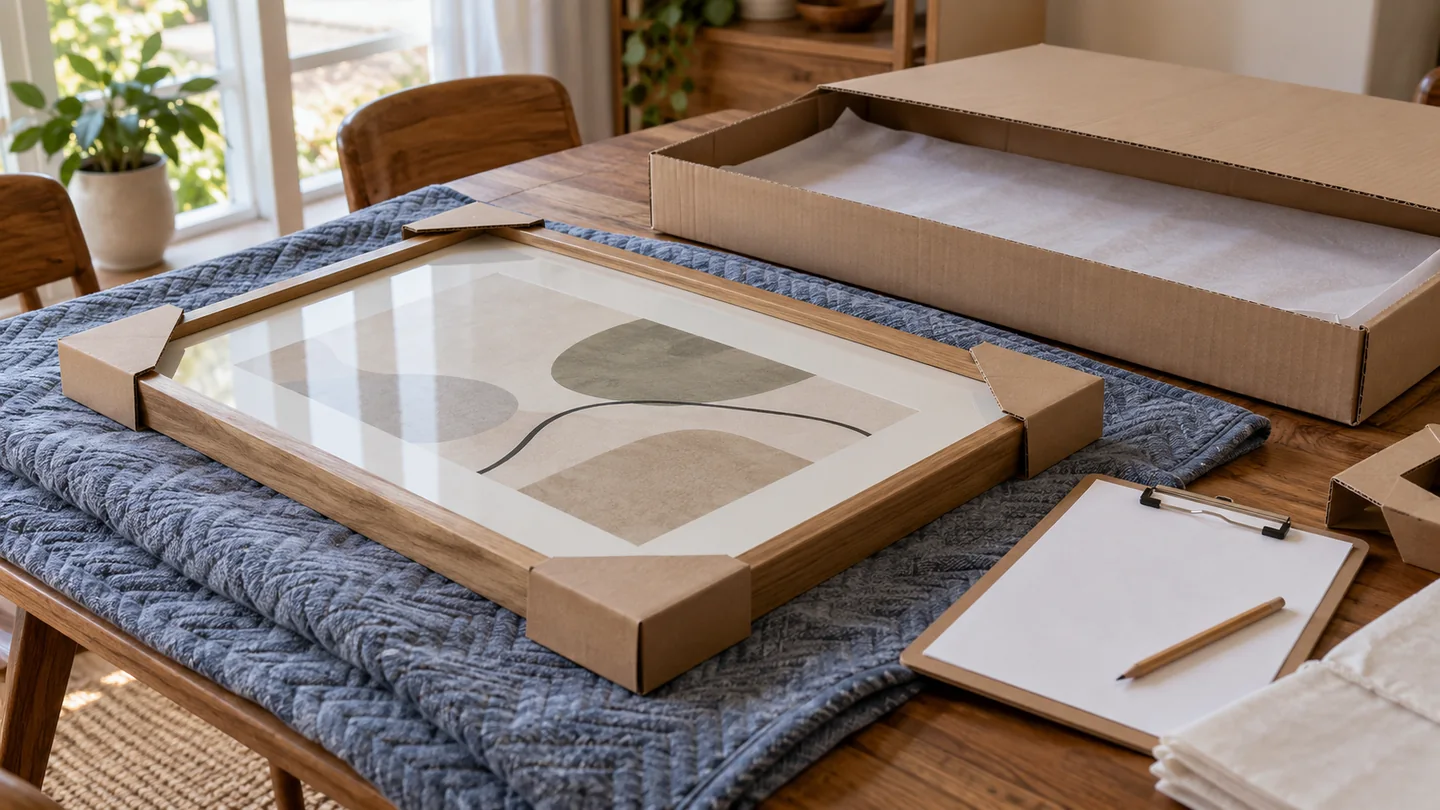
Keep self-packed and professionally packed belongings organised
Before the packing visit, separate the agreed fragile items from goods you have already packed. Leave enough clear work space and keep the relevant cupboards or display areas accessible. Ask whether items should remain in place for assessment rather than spreading them across several rooms.
Set aside important documents, medicines, daily essentials and possessions that should remain with you. If something must be used after the packing visit, identify it in advance. A fragile-only scope should have a clear finish point so both you and the team know which goods are ready for collection.
Label cartons and keep a simple packing record
Agree how packed cartons will be identified by destination room, contents group and carton number. Use our box labelling and inventory tips to connect them to the final load list. Record which cartons you packed yourself and which were prepared under the agreed service.
Tell the removalists about self-packed fragile cartons before loading. Do not assume that sealed contents have been assessed by the packing team. If you want a carton checked or repacked, request that work and confirm the scope rather than relying on a general packing booking.
Confirm collection, delivery and unpacking responsibilities
Ask when packing will finish, how the prepared goods will be stored before collection and who will handle them at each stage. Confirm the destination rooms and any unpacking assistance separately. Check any proposed protection or cover, including conditions for self-packed goods, rather than assuming packing automatically includes insurance.
For an interstate move, compare the whole arrangement using our interstate removal quote checklist. A helpful quote connects selected fragile packing with collection, transport, storage if needed and final delivery, without leaving the handover unclear.
Keep selected-item packing aligned with revised moving dates
If your collection or delivery booking changes, use the interstate moving-date update checklist to review the packing visit, remaining fragile items and handover. Confirm the revised item list and timing alongside any storage stage rather than assuming the original packing arrangement still fits.
Fragile-only packing questions
What does fragile-only packing mean?
It means agreeing on selected delicate belongings for packing assistance rather than packing every room. The scope may include particular glassware, crockery, ornaments or framed pieces. Provide an item list, quantities, condition and photos so availability, materials and the required work can be assessed and confirmed.
Can I pack the rest of my home myself?
Yes, you can enquire about a partial arrangement while preparing the remaining goods yourself. Agree which items the team will pack, how both groups of cartons will be identified and when everything must be ready. Tell the removalists about self-packed fragile goods and request checking or repacking separately if needed.
Are packing materials included in a fragile-only packing quote?
Confirm this in the particular written quote. Ask which cartons, paper, cushioning or picture protection are supplied and whether materials and labour are combined or separately priced. Unusual shapes, sensitive surfaces or damaged items may need a different assessment. Do not assume every packing material is included.
Can fragile packing be arranged before moving day?
Ask whether a suitable packing visit can be coordinated before collection or arranged separately. Give your dates, selected-item list, addresses and wider moving plan. Availability and the sequence need confirmation. Agree where the prepared goods will remain and who is responsible for them before the removal visit.
Can ordinary packing be used for valuable artwork and antiques?
Not automatically. Provide dimensions, condition, sensitive finishes, previous repairs and any conservation or manufacturer instructions. Delicate or unstable items may need specialist advice or a separately assessed packing method. A routine household packing booking should not be assumed to include specialist conservation work.
Does fragile packing include loading, unpacking or insurance?
Check each part of the arrangement rather than assuming it follows from the packing service. Confirm loading, transport, delivery placement and unpacking in the written scope. Ask what protection or cover is offered, any separate price and conditions for self-packed goods. Packing assistance does not automatically establish insurance cover.
Ask for packing help with the items that need extra attention
Send Tas Removals & Storage your fragile-item list, photos, dates and moving plan. We can discuss the selected packing scope, assess the requirements and confirm a suitable available arrangement.
Next: compare wider packing and unpacking services or review suitable packing supplies.