
Tasmania Packing Timeline Guide for a Smooth Local House Move
A Realistic Packing Timeline That Stops Last-Minute Chaos
If you’ve ever moved house in Tasmania, you already know the truth: the actual moving day isn’t the hard part — it’s the two weeks before it, when every cupboard suddenly becomes a project and every box feels like it needs “just one more thing.” This page gives you a simple, removalist-friendly packing timeline that works for real homes — families, busy schedules, awkward access, and the usual mix of furniture, white goods, fragile items, and the random “where did we even get this?” stuff.
Give the kitchen its own finish date with our kitchen packing service guide, including the essentials you will keep out. Plan the receiving stage with our unpacking services guide so first-use cartons and priority rooms are identified before delivery.
The aim is to reduce stress, keep your move organised, protect your household goods, and make sure the removalists can load efficiently. If you want help with the heavy lifting and transport, our team at Tas Removals & Storage provides trusted local removalists in Tasmania and practical options for families and households who want a safe, clean, professional move. If you want the “how to pack properly” side of the puzzle, our packing tips and recommendations hub pairs perfectly with this timeline.
Why a timeline matters (and why most moves blow out)
Moves blow out for three predictable reasons: underestimating volume (more stuff than expected), poor carton choices (weak boxes and overpacked cartons), and no staging plan (boxes everywhere, “do not load” items mixed into the pile, and no clear priority order). A solid packing schedule fixes all three — and makes the job faster, safer, and more affordable in the long run because there’s less double-handling.
Quick reminder before you start
This is a local Tasmania packing timeline, so it focuses on getting your home move ready for efficient loading and safe furniture transport. If you need to store items during a settlement gap, reno period, or access delay, include the storage steps as well and review our storage services in Tasmania. If you’re moving long-distance instead, use our interstate packing guide for the extra protection interstate moves require.
The Tasmania local move packing timeline (use this like a checklist)
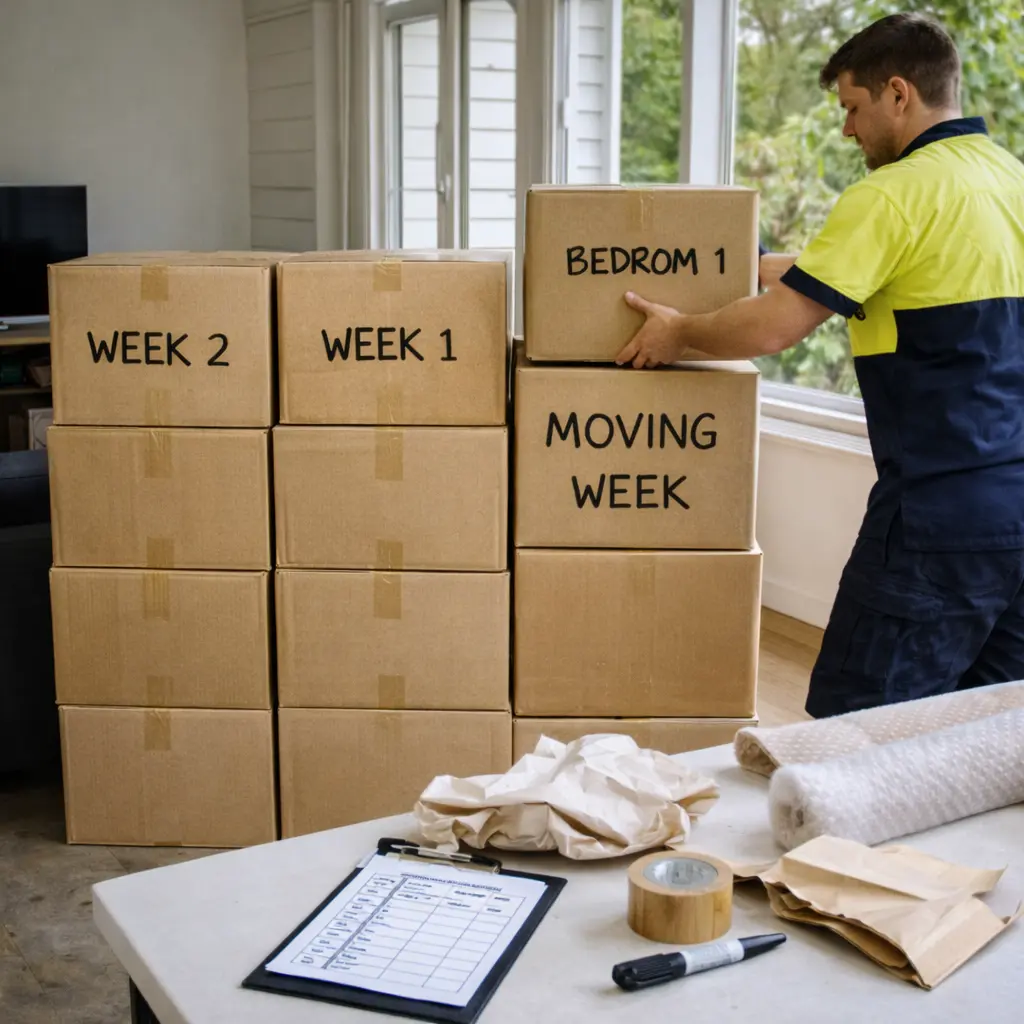
Below is a proven timeline that removalists love because it makes moving day smooth: cartons are stable, labels are clear, fragile items are protected, and furniture can be moved safely without tripping over loose items. You don’t need to be perfect — you just need to be consistent. If you’re unsure what to label or how to track cartons, use our box labelling and inventory tips to keep everything organised from pickup to delivery.
4–5 weeks out: set the foundation
If you’ve got the time, this is where you make the rest of the move easier. A little effort here saves a lot of stress later.
- Book your removalist early: confirm dates, access details, stairs, parking, and bulky furniture items.
- Start decluttering: donate, tip, sell, or recycle anything you don’t want to move. Less volume = faster loading.
- Create a packing zone: one corner of a room for cartons, tape, wraps, labels, and markers.
- Gather the right materials: strong cartons, packing paper, bubble wrap, tape and mattress protection. If you’re not sure what you need, use our packing materials and box sizes guide.
- Start a simple inventory: note valuables and essentials so nothing “vanishes” during the chaos.
2–3 weeks out: pack the “non-daily” rooms first
This is where most people finally start boxing things up. The trick is to start with rooms you can partially “switch off” without disrupting daily life.
- Pack spare rooms first: guest bedding, unused linen, books, décor, and non-essential storage cupboards.
- Pack seasonal items: heaters/fans (depending on the season), outdoor gear, sports equipment, spare blankets.
- Begin garage/shed packing: label clearly and keep heavy cartons small and manageable.
- Confirm restricted items: separate chemicals, fuels, and anything that shouldn’t go in cartons. Use our what not to pack guide so you don’t get caught out on moving day.
7–10 days out: focus on kitchen, wardrobes, and fragile items
This is the week where packing speed matters. Kitchen and wardrobes are the “time thieves” — start earlier than you think.
- Start the kitchen in zones: pack one cupboard at a time so you can still live in the house.
- Pack fragile items properly: plates vertical, glasses wrapped, voids filled. Don’t let items rattle in the box.
- Reduce pantry volume: use up food, donate unopened items, and avoid packing anything that can leak.
- Wardrobes: pack out-of-season clothes, leave “last week” outfits accessible.
- Label with purpose: room + priority + fragile notes. (Example: “Kitchen – Priority – Fragile”).
3–5 days out: stage the move like a pro
This is the stage where good moves become great moves. The goal is clear space, clear access, and fewer surprises.
- Create a “Do Not Load” zone: keys, documents, meds, chargers, laptops, valuables, and anything travelling with you.
- Confirm furniture that needs disassembly: beds, large tables, modular couches (keep hardware together in a labelled bag).
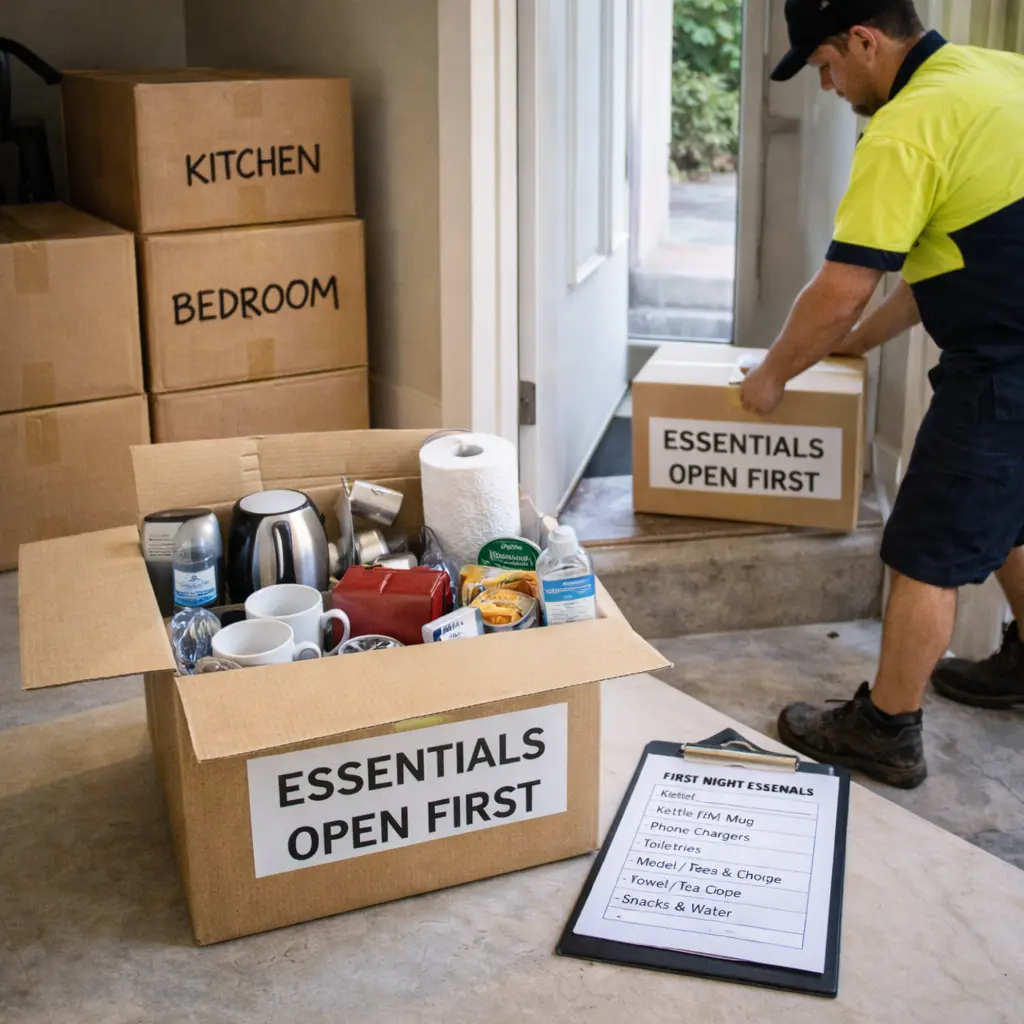
- Finalise the essentials box: kettle, mugs, toiletries, towels, bin bags, snacks, basic tools, paper towel.
- Keep kids/pets in mind: pack a dedicated “first day” kit so you’re not hunting through cartons.
- Prepare appliances: defrost fridge, drain washing machine, secure cords and hoses.
Moving day: make loading fast, safe and organised
On the day, your goal is simple: stay calm and keep the path clear. The removalists will handle the heavy lifting and furniture handling — you just help the job run smoothly.
- Keep walkways clear: no loose items in hallways, stairs, or near exits.
- Group cartons by room: it speeds up loading and makes delivery placement easier.
- Communicate priorities: tell the team what must come off first (essentials carton, baby items, key furniture).
- Do a final sweep: check sheds, cupboards, behind doors, and the garage.
If you want the simplest path, Tas Removals & Storage can help you combine packing support with your removals booking. We’ll guide you on staging, carton types, protection for furniture, and safe loading — so your local move runs on time and your belongings arrive in good condition.

Testimonials

The customer service was great. We got an affordable quote and the whole process from pickup to
delivery was a success! My partner and I are very happy with the outcome and would like to highly
recommend Tas Removals and Storage!

Tas Removals moved us from Hobart to Launceston. We couldn’t have asked for a better moving company.
Affordable, quick and effective at everything they did. Handled everything with care and made the
whole process quick and easy!
We were dreading the whole moving process. After several quotes, we spoke to TAS Removals and Storage
and decided to go with them. They communicated well and we have a slight delay, but it all worked
out really well in the end. Highly Recommended moving company!!!
These guys were great! Competent would be an understatement. They went above and beyond by hiring
more guys to help with our large move! We moved into a new home with a very long steep drive way!
They moved everything carefully during the whole process! Nothing was broken and we were extremely
happy with the overall process.
We were excited about moving. Then when it come to packing and organising everything outlined by
tas removals we got scared the whole thought process becoming daunting! They told us they could
pack everything and get it ready for the move. So we did that and it turned out great! Highly
recommended local Tassie removal company right here!!!
My wife found these guys online and I thought we would give it a go. The staff members we dealt
with were very good at communicating. Nothing was broken and everything was picked up on time and
delivered on time. Would use these guys again!
As a single man with not a lot of things. I have moved a lot over the years and I must say that
these guys were GREAT!!! Cheap, professional and the communication was good! When I move again
I will be sure to look these guys up and I would recommend you do the same
Tas removals did a backload from Yarrawonga to Hobart. We had a large amount of furniture to bring
and these guys were good! They handled everything carefully as I had a lot of antique furniture.
Everything was wrapped and wrapped again and then when they loaded it all on the truck it was
wrapped again with blankets of some sort. Awesome job guys! Highly recommended.
Tas Removals and Storage are an awesome company. Friendly and professional, they really cared about our move.
I can be quite pedantic about certain things but the overall move was a great success!