Preparing Fridges and Washing Machines for Moving in Tasmania
Prepare large household appliances before the removal truck arrives. Use the appliance manuals, organise emptying and drying, and confirm who handles disconnection, transport preparation and reconnection.
Tasmania household appliance preparation · Reviewed 1 October 2026
Prepare household appliances before the removal truck arrives
A fridge or washing machine needs more preparation than a carton of kitchenware. Food, residual water, loose shelves and model-specific transport parts all need attention before collection. A clear plan also identifies who will disconnect the appliance, how it will leave the property and what must happen after delivery.
For a house move in Tasmania or an interstate removal, start with the actual appliance manuals. This guide helps organise the moving tasks around those instructions. Discuss the scope through our household moving services page and agree preparation responsibilities before moving day.
Find the instructions
Record the model and locate its transport, storage and installation guidance. Check the parts needed before collection.
Empty and dry
Plan food removal, cleaning and residual-water preparation. Give the appliance time to dry as its instructions require.
Plan the delivery
Measure access at both properties and organise the appropriate help for placement, connections and recommissioning.
Fridge and washing machine moving checklist
List each large appliance separately, even if several are in the same room. Add its dimensions and preparation status to the furniture volume and moving inventory. This gives the removalists useful information about the load and identifies unfinished tasks before collection.
On a small screen, scroll sideways to read all three columns.
| Moving task | Fridge or freezer | Washing machine |
|---|---|---|
| Identify the model | Find transport, defrosting and restart instructions. | Find draining, transport-restraint and installation instructions. |
| Empty the appliance | Remove food and organise chilled items separately. | Remove laundry and check the drum and dispensers as directed. |
| Manage water | Defrost where required; plan water-connected features. | Prepare residual water and hoses according to the manual. |
| Prepare loose parts | Identify shelves, drawers and accessories needing protection. | Locate correct transport parts and identify detached accessories. |
| Check access | Measure the appliance and the route through both homes. | Explain cabinetry, steps, doorway clearance and laundry access. |
| Plan delivery | Follow placement, connection and standing-time instructions. | Remove transport restraints as directed before operation. |
Assign a person and completion time to preparation still needed. “Fridge ready” is less useful than “food removed, cleaned and dry; water disconnection arranged”. If an appliance will remain at the property, remove it from the moving inventory so the booking describes the confirmed load.
Use the right appliance manual and agree who does what
Locate the model information and keep the relevant manual accessible. A similar-looking fridge or washer may have different transport instructions. Manufacturer support pages such as Fisher & Paykel’s Australian manuals and support help you find documentation for the actual appliance.
Check whether the removal booking includes any preparation work. Furniture transport should not be assumed to include plumbing, electrical work, installation or testing. Explain water-connected refrigerators, built-in appliances and connections that need attention when discussing the job.
Arrange suitable qualified help when a connection cannot be safely dealt with under the appliance instructions or requires specialist work. Do not leave an unresolved disconnection until the removal truck arrives. Confirm when the appliance will be ready and who will be present to complete that work.
For professional assistance with the rest of the household, review our packing services. Agree the appliance work separately from carton packing, and use the interstate packing guide to coordinate the wider preparation schedule.
Empty, clean and dry a fridge or freezer before moving
Plan food use before the move, then remove the remaining contents. Keep anything that needs temperature control in a suitable separate arrangement rather than relying on an unplugged fridge during removal. Add pantry and food decisions to your household checklist before packing the kitchen.
Follow the manufacturer’s instructions for switching off and defrosting where required. Allow time for the task and manage water so it does not affect flooring or packed belongings. Do not use a sharp object to chip away ice or improvise a defrosting method that conflicts with the manual.
Protect shelves, drawers and the appliance body
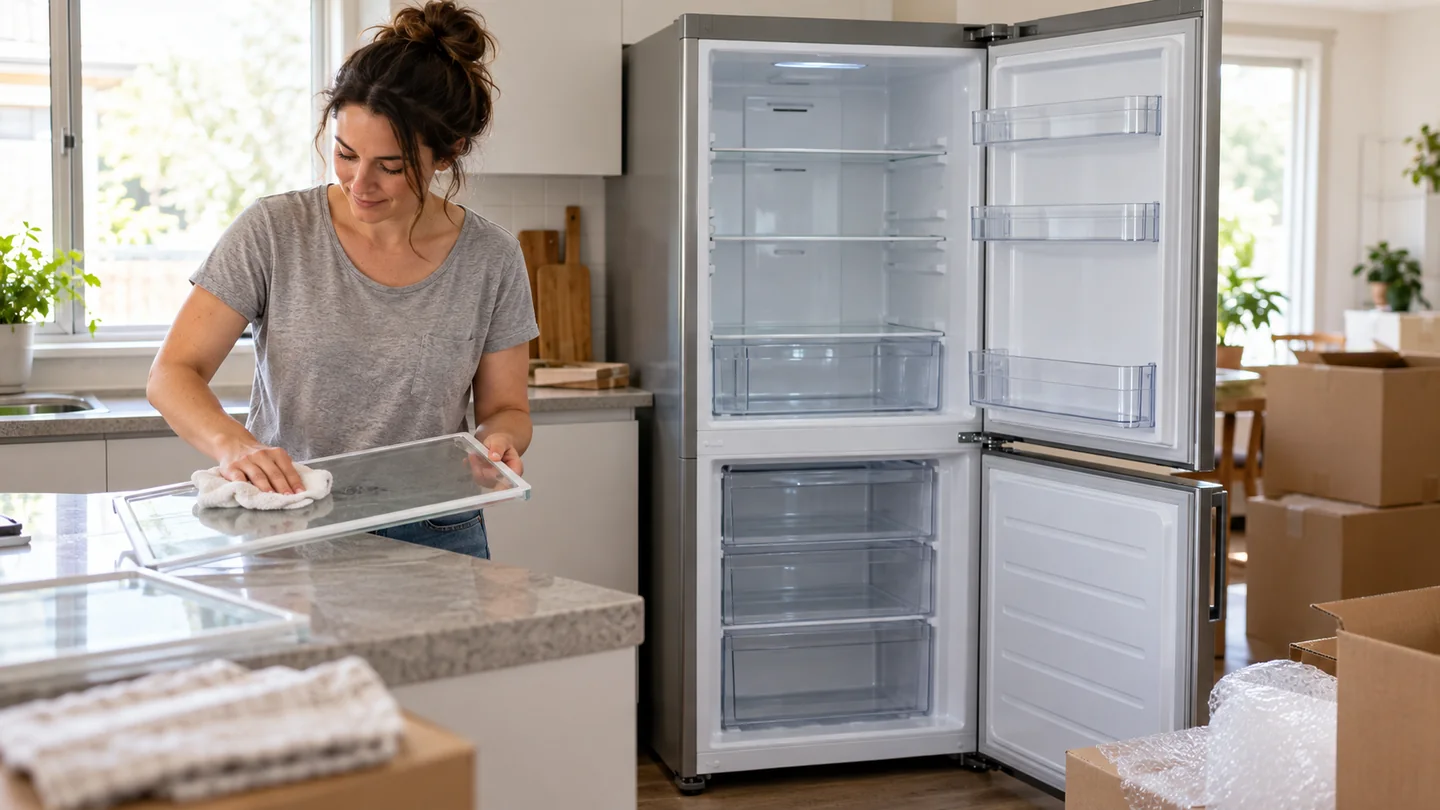
Clean the interior and dry it thoroughly as directed. Check how removable shelves, drawers and other accessories should travel. Some parts may need separate protective packing; others may have a specified position. Identify them clearly so they can be matched to the fridge after delivery.
Tell the removalists if the refrigerator has a water dispenser or ice maker connection. Confirm who will isolate and disconnect it, and keep the connection parts identifiable under the manufacturer’s instructions. A water-connected fridge should not be described simply as ready when that work is still outstanding.
Discuss suitable protection for doors, finishes and handles, following the appliance instructions. Avoid attaching labels or tape directly to delicate surfaces without checking suitability. Keep the fridge upright as required by its transport guidance and let the removal team assess handling and securing.
For a move into Tasmania, emptying the fridge also helps you review food separately from the furniture load. Our household biosecurity preparation guide links to the official item categories. Cleaning an appliance is not a substitute for checking the requirements for food or other goods you intend to bring.
Prepare a washing machine using its transport instructions
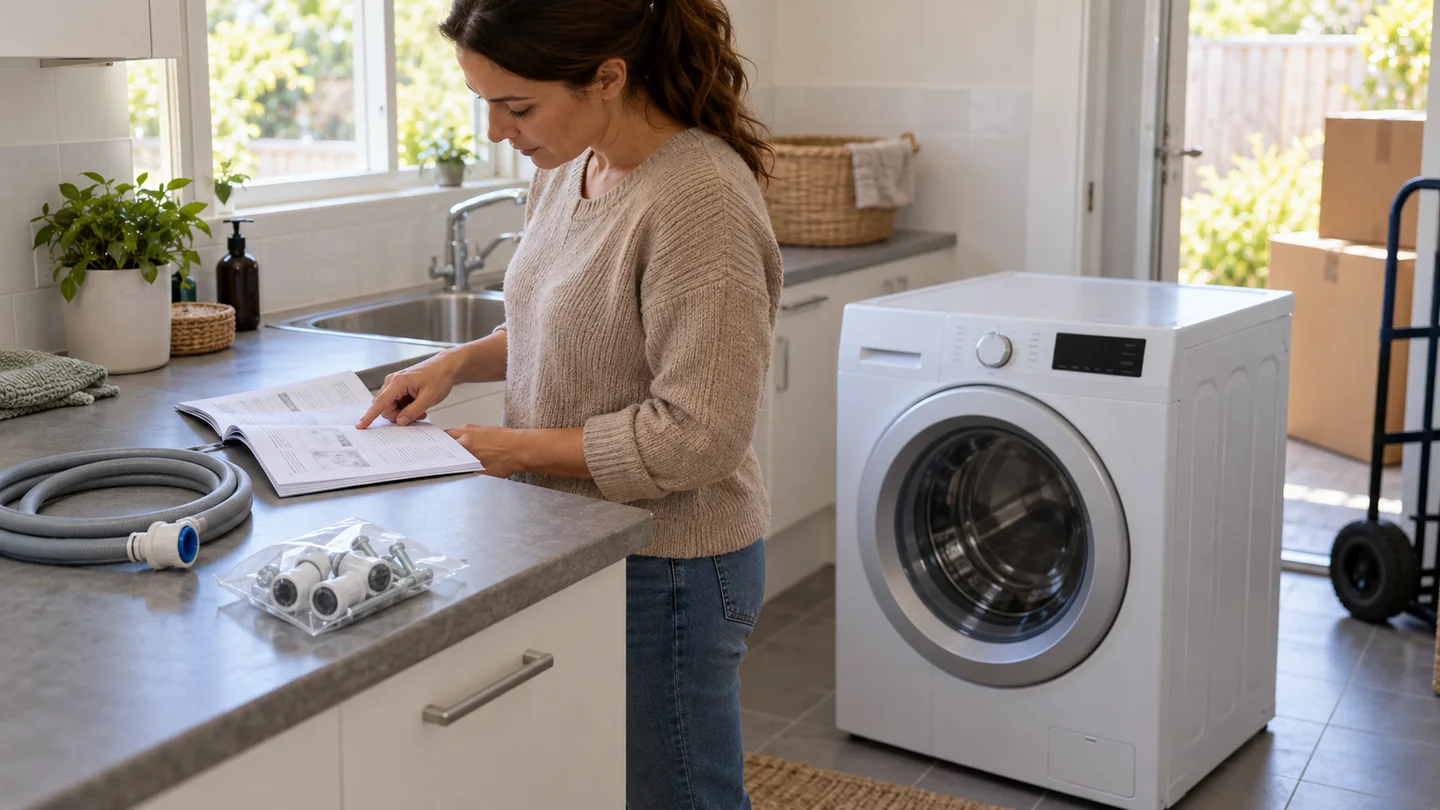
Remove laundry and follow the model’s preparation guidance for residual water, hoses and accessories. Do not assume an empty drum means the machine is dry. Keep towels or other suitable protection available during the instructed water-removal process, and arrange help if you cannot safely complete it.
Check the required transport restraints well before collection. Bosch Australia’s transport-lock guidance explains the role of transport protection and keeping the parts for a later move. Use the correct components and fitting instructions for your machine.
Locate the right transit parts before moving day
Where the model requires transit bolts, locks or other restraints, check that the original parts are available and suitable. If they are missing, ask the manufacturer about replacements and the correct procedure before arranging collection. Do not substitute generic hardware or assume another washer’s parts will fit.
Front-loading and top-loading washing machines can have different preparation requirements. Avoid applying a fixed bolt count or a procedure from another model. External wrapping protects surfaces; it does not replace internal transport restraints required by the manufacturer.
Keep hoses and agreed loose parts protected, dry and clearly identified. Record where they will travel so they can be found during installation. Tell the removalists if preparation is incomplete rather than relying on an unconfirmed moving-day fix.
Measure appliance access at collection and delivery
Measure the appliance and the route it must take, including doorway openings, tight turns, steps and cabinetry. Provide photographs where helpful and note restrictions at both properties. Do not assume that an appliance will fit the new kitchen or laundry because it fits the current home.
Tell the removalists about a steep path, split-level house, lift booking or long carry distance. The Hobart moving access guide offers a practical way to describe those details. The same clear access brief is useful when planning a Launceston or regional Tasmania house move.
Large appliances need a handling plan suited to their weight, dimensions and the route. Safe Work Australia’s manual tasks guidance explains why force, awkward positions and the work area matter. Leave transport handling to the agreed team and discuss obstacles before collection.
When enquiring about Hobart removals and storage or Launceston removals and storage, include appliance measurements and access alongside the furniture list. Advise the coordinator if doors, fittings or building arrangements need attention before the route is usable.
Prepare appliances differently when storage is involved
If the fridge or washer will be stored, follow the model’s storage guidance as well as its transport instructions. Emptying, cleaning and drying deserve particular attention because residual moisture can remain after the appliance appears ready. Confirm suitable protection and ventilation with the storage provider.
Agree how doors and loose parts will be managed while stored, following the manufacturer’s directions and the provider’s safety arrangements. Do not leave an appliance accessible to children or improvise a door position. Label any separately packed shelves or hoses with the appliance they belong to.
Use the packing for storage guide to organise identification and retrieval. Explain if the appliance must be available before the rest of the furniture. Check the arrangement through the Launceston storage planning guide rather than assuming you can access any item at any time.
If moving dates change, review food use, disconnection appointments and the planned drying period. Our interstate date-change checklist helps you send a clear updated brief and confirm whether the storage or delivery plan also needs adjustment.
Check placement and recommissioning after delivery
At the new property, confirm the planned location and identify any concern with the appliance or its separate parts. Keep the manuals available. Delivery of a fridge or washer and installation are separate tasks unless your booking explicitly includes the appropriate work.
For the refrigerator, use the manufacturer’s instructions for placement, ventilation, connections and the standing time before switching on after transport. There is no single restart waiting period for every fridge. Tell the installer how it was transported if that affects the model’s instructions.
For the washing machine, required transport restraints must be removed according to the manual before operation. Bosch’s washing machine installation guidance provides a manufacturer example; use your own model’s instructions for parts, positioning and connections.
Arrange installation and checks with the appropriate person rather than operating an appliance whose connections or preparation are uncertain. Keep the transport parts labelled for a future move. Our Tasmania moving checklist helps coordinate these delivery tasks with household arrival.
If your household move also involves a vehicle, use the separate car transport handover checklist. Confirm the receiving person and timing for each service so appliance delivery does not depend on an unconfirmed vehicle arrival.
Fridge and washing machine moving questions
When should I start preparing a fridge for a move?
Start with the instructions for the actual fridge model and allow time to use or remove food, defrost where required, clean and dry the appliance. Coordinate this with collection rather than assuming every fridge needs the same lead time. Tell the removalists about water connections, size and access.
Does my washing machine need transit bolts before moving?
Check the model’s transport instructions. Where transit bolts or other transport restraints are required, use the correct parts and fitting procedure for that appliance. Find missing parts through the manufacturer before collection. An empty drum or external wrapping does not replace required internal transport restraints.
How long should I wait before switching a fridge on after delivery?
Use the manufacturer’s instructions for the exact model and how it has been transported. There is no single waiting period to apply to every refrigerator. Keep the appliance upright as instructed, confirm placement and connections, and follow the specified standing time before powering it on.
Will the removalists disconnect and reconnect my appliances?
Ask what is included in your particular booking and agree responsibilities before moving day. Furniture transport should not be assumed to include plumbing, electrical work, installation or testing. Arrange suitable help where required, especially for water-connected fridges or connections you cannot safely isolate.
How should I prepare a fridge or washer for storage?
Follow its storage instructions, empty and clean it, remove residual water as directed and let it dry. Confirm protective packing, ventilation, transport restraints and access to stored parts with the storage provider. Plan the appliance’s retrieval date and recommissioning separately from the rest of the furniture.
What appliance details should I include in a removal quote?
List each appliance separately with dimensions, model or type, collection and delivery access, steps and any water connection or preparation work still needed. Include storage plans and who will handle disconnection and installation. Update the inventory if an appliance is added, removed or replaced before collection.
Include appliance preparation in your Tasmania moving brief
Send your furniture list, appliance dimensions, collection and delivery addresses, preferred dates and access details. Explain any preparation, storage or connection work still needed so the moving service scope can be discussed clearly.
Next: coordinate your interstate packing or prepare a vehicle collection and delivery handover.