
A move to Tasmania is not just a longer mainland run with a different postcode at the end. Bass Strait changes how timing works, how delivery windows are explained, and how flexible the overall move needs to be. That is why people asking how long it takes to move to Tasmania often get vague answers when what they really want is a realistic explanation of what happens between loading on the mainland and unloading household goods in Tasmania.
The practical reality is that Bass Strait household move planning involves more than road distance. It includes mainland collection timing, freight coordination, sailing availability, destination scheduling, and sometimes storage when dates do not line up cleanly. If you are still at the early planning stage, it helps to start with moving to Tasmania and compare the broader service options through interstate removalists in Tasmania.
For selected pieces, use small furniture loads from Melbourne to Tasmania to describe the inventory and handovers. If the final home is not chosen, our Tasmania moving guide for an unknown delivery address covers the storage interval and later receiving plan.
How Bass Strait timing affects moves to Tasmania
The biggest thing Bass Strait changes is that the move is no longer one simple road journey from pickup to delivery. There is a mainland collection stage, a freight coordination stage, a crossing stage, and then a Tasmania delivery stage. That is why any solid Bass Strait moving guide to Tasmania needs to explain the move as a chain of linked steps rather than a single travel time estimate.
In practical terms, mainland to Tasmania freight timing depends on when your goods are loaded, how they are scheduled through the interstate network, when the freight leg across Bass Strait is available, and how the final delivery is sequenced once the load reaches Tasmania. That does not mean the move is unpredictable. It means the timing has more moving parts than a standard mainland relocation.
This is also why transport planning for moving to Tasmania is best handled with a little breathing room. Customers who understand that Bass Strait logistics for moving house involve handover points, route coordination, and delivery planning usually have a much smoother experience than those expecting the entire job to behave like a same-state express run.
What a mainland-to-Tasmania delivery window really means
A delivery window is not the same thing as a guaranteed minute-by-minute appointment. When removalists talk about moving to Tasmania delivery times, they are usually describing the most realistic delivery range based on the current route, freight coordination, unloading schedule, and destination access. That is normal. It is not dodging the question. It is the honest way to describe a move that includes a Bass Strait freight leg.
What affects a Tasmania delivery window most is how tightly your move needs to be scheduled and whether the service is direct or shared. A dedicated service can offer more control around timing. A shared load to Tasmania can be more cost-effective, but it usually works within a broader delivery range because your goods are part of a larger logistics plan.
If you want the budget side explained alongside the timing side, compare this page with cost of moving to Tasmania. Price and delivery timing are usually connected more closely than people think.
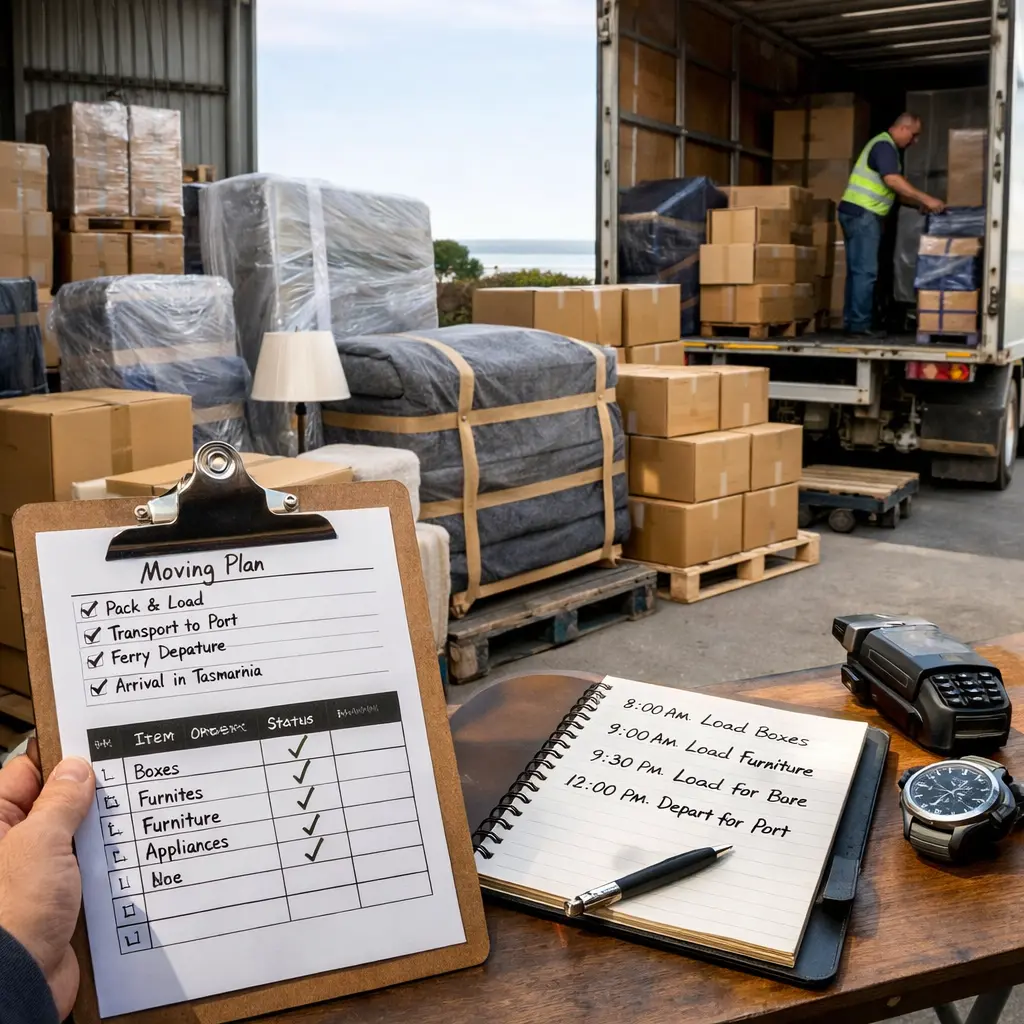
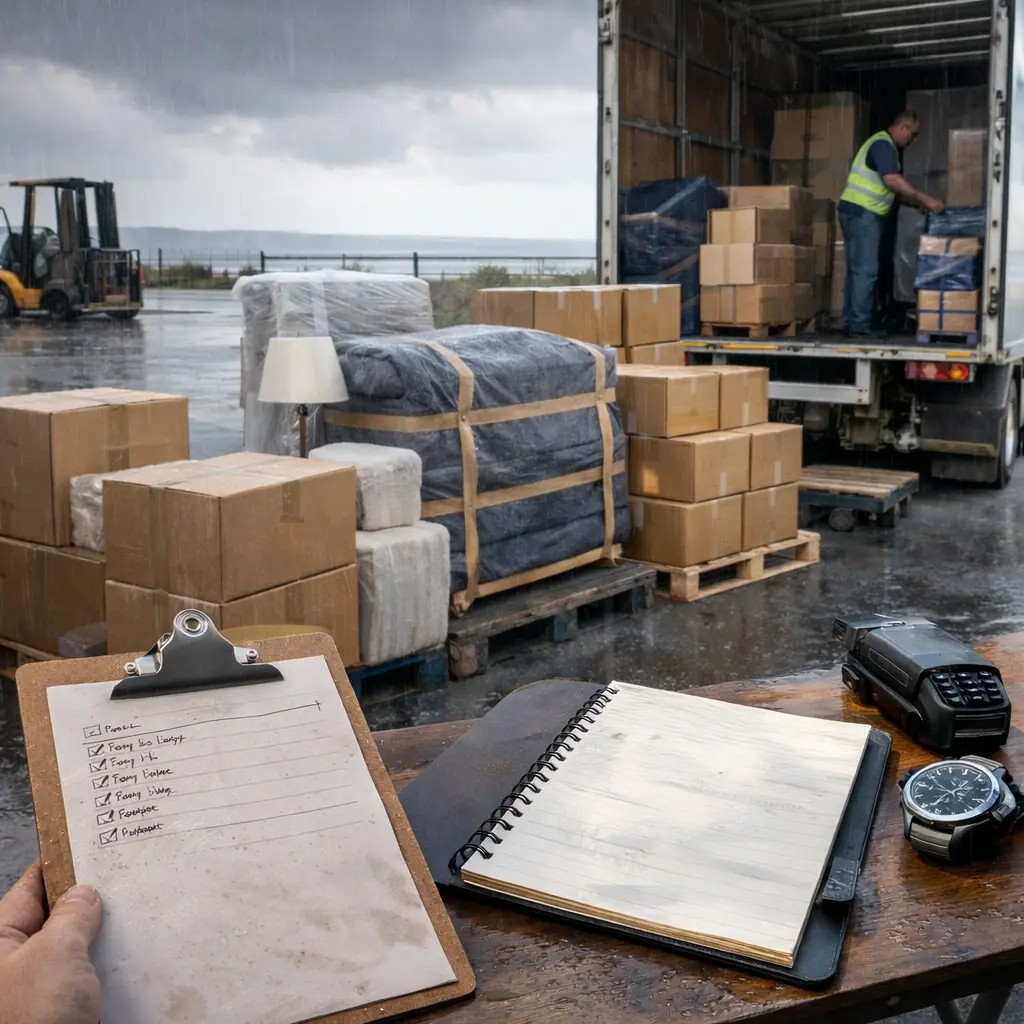
How Tasmania weather and sailing schedules can shift timing
One of the most common questions in Tasmania interstate delivery planning is whether weather can change the schedule. The realistic answer is yes, sometimes it can. Weather delays on Tasmania moves are not guaranteed, but they are part of the reason professional movers talk in delivery windows rather than pretending every crossing behaves like a fixed highway run.
Ferry timing for Tasmania moves sits within a broader freight system, so sailing availability, freight sequencing, and downstream delivery planning all interact. A shift in one part of that chain can affect another. That does not automatically mean a major delay. Often it simply means the ETA gets adjusted to reflect the real movement of the load rather than a theoretical best-case plan.
This is where Tasmania transit updates matter. Good communication is not about promising the impossible. It is about letting customers know where the move sits in the process and what that means for the next step. If the household is moving into Hobart, Launceston, or Devonport, the final delivery timing can also depend on local route sequencing and property access once the goods are in Tasmania.
If you are still deciding where in Tasmania you are heading, it is worth pairing this with choosing where to live in Tasmania and the destination pages for Hobart, Launceston, and Devonport. Final delivery conditions can vary more than people expect.
When Tasmania backloading and shared loads make sense
Backloading and shared-load services make the most sense when flexibility is available and the move does not need a tightly controlled delivery slot. Tasmania backloading delivery windows are usually broader than direct-service windows because the goods are moving as part of a larger route plan rather than on a truck space reserved around one single job.
That does not make shared transport second-rate. In many cases it is a sensible way of moving furniture to Tasmania by removalist, especially for smaller households, staged relocations, part-load moves, or customers who want a more budget-conscious service and can work within a realistic ETA for Tasmania removals.
If your dates are fixed, your settlement is tight, or you need a more precise handover at the delivery end, a direct option may be more practical. If your dates have room to move, shared load to Tasmania can be a very efficient fit. Anyone comparing those options should read Tasmania backloading and also review choosing a removalist for Tasmania, because service fit matters just as much as price.
How Tasmania storage helps when dates do not line up
Storage during a Tasmania move can solve timing problems that would otherwise put the whole delivery under pressure. If your lease ends before the new place is ready, if settlement shifts, or if you are travelling ahead of the goods and need more control over arrival timing, storage can turn an awkward schedule into a manageable one.
Staged delivery in Tasmania is often the cleaner answer when the property timeline is uncertain. Instead of forcing the entire job into one narrow window, the goods are held safely until the delivery conditions make sense. That can reduce stress, avoid rushed unloading decisions, and give you more control over the final handover.
For that side of the move, it is worth reviewing storage in Tasmania, move-and-store packages, and settlement-gap move-and-store. Those services exist for a reason: not every Tasmania move lines up neatly on paper.


What to ask before your Tasmania goods leave the mainland
Before loading on the mainland begins, ask the questions that clarify how the move will actually run. What kind of delivery window should you expect? Is the service direct or shared? What happens if the destination property is not ready? How will updates be handled during the Tasmania freight leg explained to you? Those answers matter more than generic promises about “fast delivery.”
It is also worth confirming the practical basics: whether access details have been noted correctly, whether storage is available if plans shift, and whether there is anything in the load that should be removed before uplift. Customers who do this part well usually experience much smoother transport planning for moving to Tasmania because there are fewer surprises once the goods are already in the system.
This stage also links naturally with the Tasmania moving checklist. A good checklist keeps the paperwork, delivery prep, and essential planning under control before the load is committed to the route. If your quote and timing still feel unclear, it also helps to compare your expectations against cost of moving to Tasmania.
The goal is not to chase a fantasy promise that every move will run to the exact hour. The goal is to understand what affects the schedule, how realistic ETAs are formed, and what choices give you the best fit for your household. Once that is clear, scheduling a move to Tasmania becomes a lot less mysterious and a lot more manageable.
If you are still in the preparation stage, it is also useful to cross-check your packing and labelling plans through the resources section and the more practical preparation advice in decluttering before moving to Tasmania. Cleaner loads and clearer plans usually make the entire freight process easier.
Learn more about moving to TasmaniaMoving to Tasmania via Bass Strait FAQs
Keep household preparation and booking changes connected
Use our Tasmania household biosecurity guide to prepare outdoor equipment and coordinate the current declaration before the load travels. A later change to collection or delivery needs a separate update: the interstate booking-date checklist explains what to provide and confirm.
Practical moving and storage guides
Before furniture reaches the receiving property, organise keys, access and an inventory handover.