What Size Storage Space Do You Need in Launceston?
Build a furniture inventory, understand usable storage space and compare unit, container and mobile storage arrangements before requesting a quote.
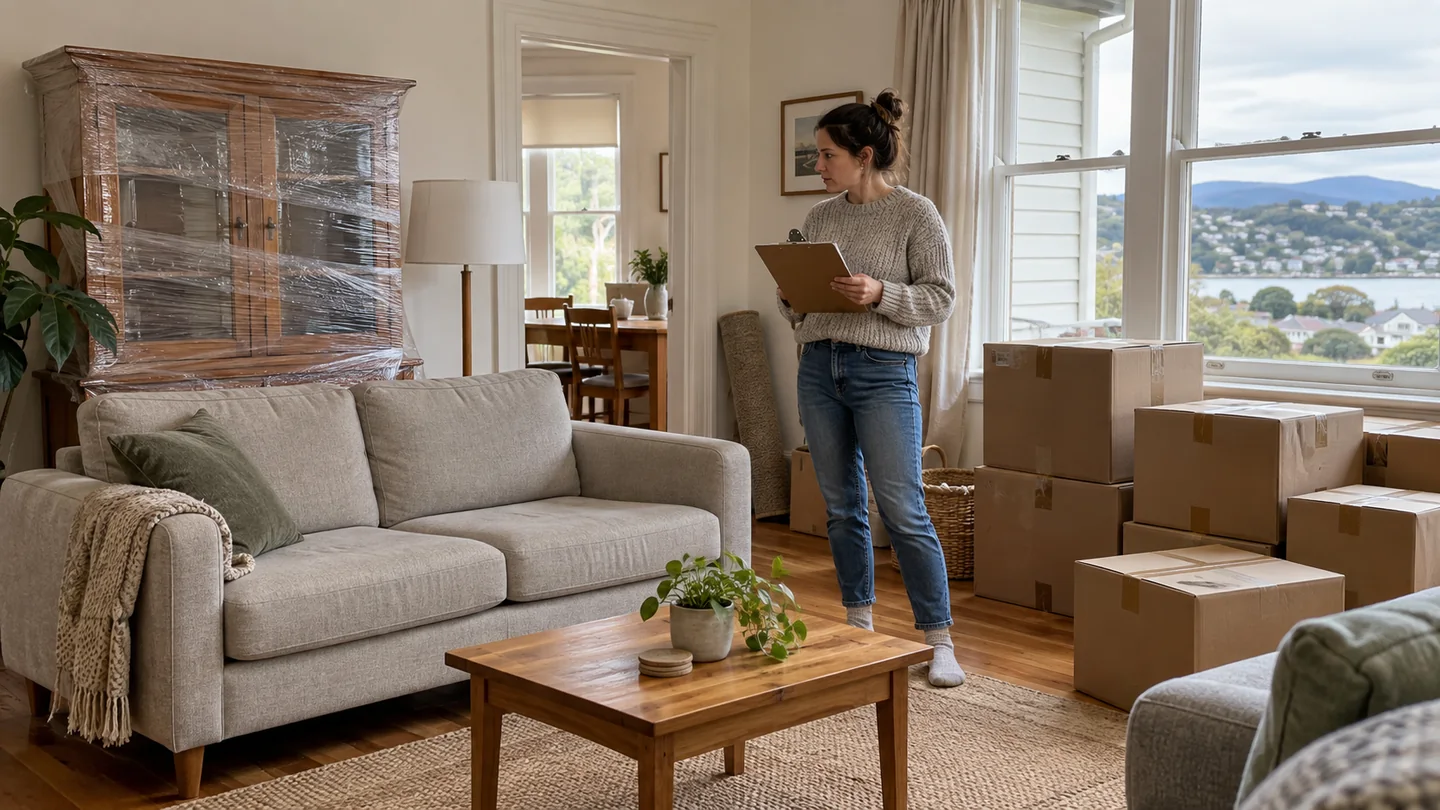
Choose storage space from your belongings, not just your bedroom count
The right storage size depends on what you are storing, how it can be arranged and whether you need access while it is in storage. A furniture inventory gives a much clearer starting point than a label such as “two-bedroom home”.
Two households in Launceston can have the same number of bedrooms and very different storage needs. One may have a compact lounge and a few cartons; the other may include a large dining suite, garage tools, outdoor furniture and appliances. Start with the actual load before comparing storage units, furniture storage or a storage container.
This guide helps you prepare a useful enquiry for Launceston storage services. Available space, container configuration, access arrangements and suitability need to be confirmed in your quote. The examples below explain how to assess space; they are not a list of unit sizes offered by Tas Removals & Storage.
List the whole load
Include furniture, white goods, cartons, garage contents and outdoor items. Record unusually long, heavy or fragile pieces separately.
Check usable dimensions
Ask for internal measurements and the door opening. Floor area alone cannot show whether your largest item will fit.
Plan access and handling
Decide what you may need to retrieve and who will load, unload and return the belongings when storage ends.
Build a room-by-room furniture storage inventory
Walk through the home, garage and outdoor areas with a notebook or phone. Count complete items and cartons, then photograph the larger pieces. For anything dismantled, describe the pieces that will actually be stored. A bed frame, its mattress and several wrapped components need clearer identification than “one bed”.
On a small screen, scroll sideways to read all three columns.
| Area or item | Record these details | Why it affects storage size |
|---|---|---|
| Lounge furniture | Sofa dimensions, separate modular sections, armchairs and coffee tables. | Large shapes and fabric protection can limit where other goods are placed. |
| Bedroom furniture | Mattresses, bed-frame pieces, bedside tables, drawers and wardrobes. | Long pieces and tall cabinets may need a particular orientation and clear space. |
| Dining and office furniture | Tabletop size, removable legs, chair count, desks and shelving. | Dismantling may change the footprint, but the protected components still occupy space. |
| Appliances | Outside dimensions, condition and any manufacturer handling instructions. | Heavy white goods need suitable handling and cannot simply be treated as empty stacking space. |
| Packed cartons | Quantity of each box size, weight where relevant and fragile contents. | Uniform cartons are easier to plan; crushable or fragile boxes may restrict stacking. |
| Garage and outdoor goods | Tools, bicycles, garden furniture and any unusual or restricted goods. | Awkward shapes can use floor space. Acceptance conditions need checking before packing. |
Keep a separate “not going into storage” list for everyday clothing, documents, medicines and anything needed during the move. This helps prevent essentials from being packed behind a full furniture load. Number cartons and connect those numbers to your inventory using our box labelling and inventory tips.
If you are moving out of a property in Youngtown, Kings Meadows, Newstead or another Launceston suburb, include the pickup address and access notes in the same brief. The suburb describes the collection location; it does not establish which storage arrangement is available.
Understand square metres, cubic metres and usable storage space
Square metres describe floor area. Cubic metres describe volume. Both measurements are useful when assessing household storage, but neither replaces a loading plan. A long table may be difficult to position in a narrow space even when the total calculated volume looks sufficient.
Floor area = internal length × internal width
Internal volume = internal length × internal width × internal height
For a purely illustrative space measuring 2 metres by 3 metres internally, the floor area is 6 square metres. With an internal height of 2.4 metres, the geometric volume is 14.4 cubic metres. This is a measurement example, not a Tas Removals & Storage unit specification or a promise that a particular household will fit.
You cannot necessarily fill that whole volume with furniture. Wrapping, gaps between irregular items, safe stacking, the door position and any retrieval route affect usable space. Do not apply a universal extra-space percentage: the arrangement needs to suit the actual belongings.
Use the furniture volume guide and cubic-metre calculator to record outside item measurements. Treat those figures as an inventory aid. Ask the storage team to assess the complete list, protection needs and layout before confirming a fit.
- Confirm internal length, width and height rather than relying on external container dimensions.
- Check the clear door-opening width and height against your largest furniture pieces.
- Ask about any fittings or other features that reduce usable space.
- Record pieces that cannot safely be stacked, dismantled or stored in a different orientation.
- Allow for the agreed access arrangement if belongings must be retrieved during storage.
Storage units, containers and mobile storage: compare the arrangement
When searching for storage units in Launceston, compare how the service works as well as the space. Self-storage, container storage and mobile storage describe different arrangements, and the terms sometimes overlap. Ask what is being offered, where your goods will be held and how you will access them.
On a small screen, scroll sideways to read all three columns.
| Arrangement | Main planning question | Details to confirm |
|---|---|---|
| Self-storage at a facility | Will you transport and handle the goods yourself? | The allocated space, loading access, permitted visit times and how retrieval works. |
| Container storage | How will the load fit within the container configuration? | Internal dimensions, door opening, loading responsibilities and storage location. |
| Mobile storage | Can a container be delivered and positioned suitably at your address? | Vehicle access, placement assessment, loading time, collection and later return. |
| Removalists plus storage | Do you need help collecting, loading and returning furniture? | Labour, protection, transport, storage duration and delivery inclusions. |
Read the service details for self-storage in Launceston, Launceston container storage and mobile self-storage, then confirm the configuration and availability for your booking. The comparison above explains planning questions; it does not guarantee that every option or space size is available.
Plan a safe layout and protect awkward furniture
Make a note of items that need extra care before anyone estimates storage capacity. Glass, artwork, polished timber, soft furnishings and large appliances can need different protection. Space saved by forcing goods together is not useful if it makes the load unstable or belongings difficult to handle.
Keep heavier cartons low and avoid placing weight on fragile items. Follow manufacturer guidance for the orientation of mattresses and appliances. Do not assume every sofa can stand on end or every wardrobe can support cartons. Discuss suitable handling and protection with the storage team.
Safe Work Australia’s manual-task guidance explains why awkward postures and forceful handling need careful planning. Use appropriate help and equipment for bulky furniture rather than trying to squeeze it into place.
For the detailed preparation process, follow our packing for storage guide. Tell the team about liquids, fuel, gas cylinders, chemicals, food or other goods that may have storage restrictions before including them in the load.
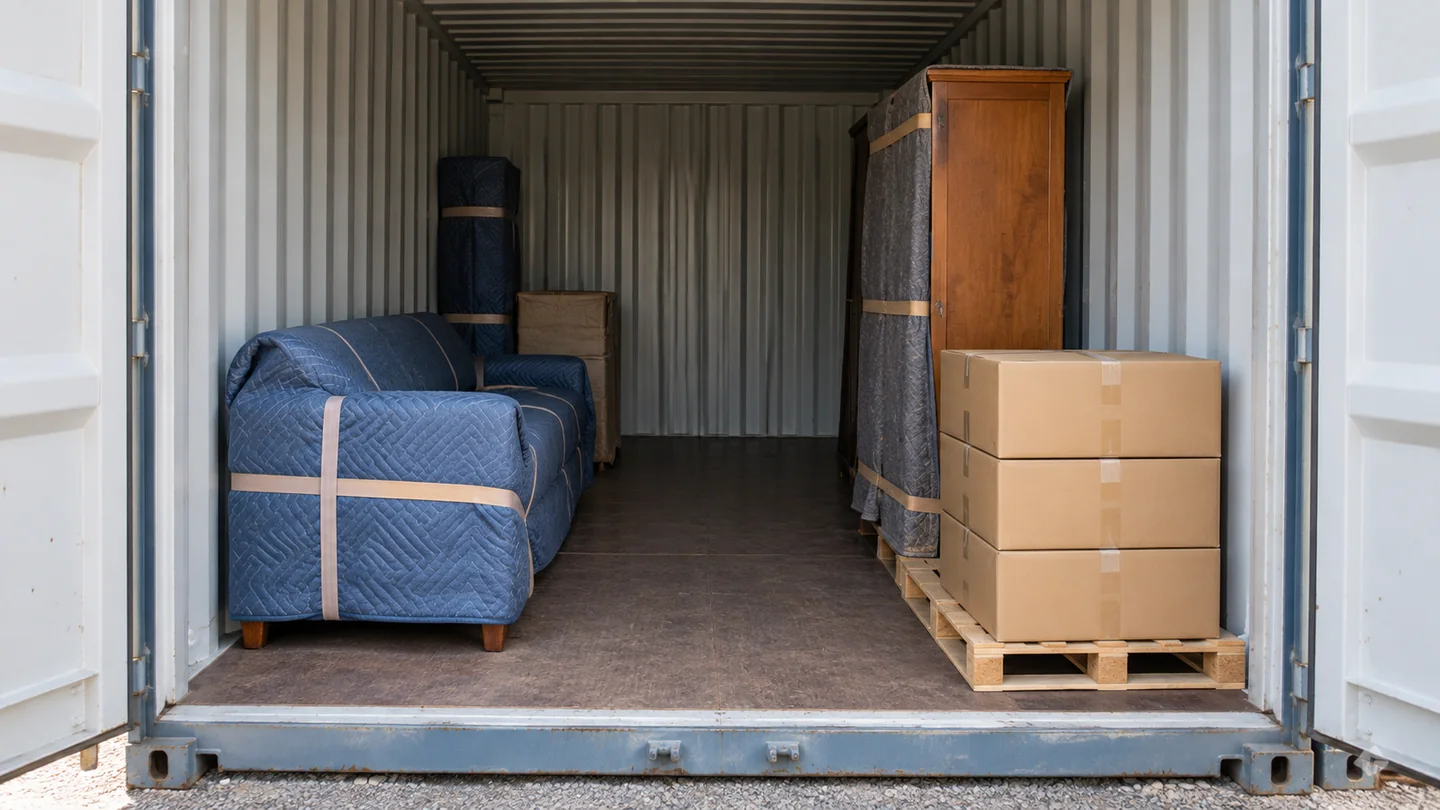
Match storage size to access, duration and your moving plan
For short-term storage between moving dates, a carefully packed load may work well if nothing needs to be retrieved before delivery. Longer-term furniture storage can involve a different plan if you expect to collect office files, seasonal items or individual boxes. State those needs before the arrangement is priced.
Ask whether access requires an appointment, how much notice is needed and whether retrieval involves staff assistance or additional handling charges. Keep frequently needed goods identifiable and discuss their placement. An aisle is only useful where access to the load is actually permitted and arranged.
If you want mobile storage delivered to your home, send photos of the driveway, gate, approach and proposed placement area. The delivery team needs to assess vehicle access, the site and the loading arrangement. Check any relevant owner or body corporate requirements before proposing a location.
For a Hobart collection or an interstate move followed by storage in Tasmania, confirm the storage location and each transport stage. A collection address is not the same as a storage depot. Our Launceston removals and storage service can help you describe the combined job, while the Tasmania storage costs guide explains which inclusions to compare.
Send these details with your storage enquiry
- The furniture inventory, carton count, large-item measurements and useful photos.
- The preferred start date, likely duration and any uncertain settlement or renovation dates.
- Collection and delivery locations, including stairs, parking and long carries.
- Whether you will load the goods or need packing, loading and unloading help.
- What you may need to retrieve, and how often, during the storage period.
- Any fragile, heavy, unusual or potentially restricted goods.
Keep a copy of the accepted quote and agreed access conditions. The ACCC’s contract guidance is a useful reference when reading service terms before booking.
Launceston storage size questions
What size storage space do I need for a two-bedroom home?
Bedroom count alone cannot establish the right storage size. List furniture, appliances, cartons, garage and outdoor contents, then record the larger dimensions. The storage team needs to assess that inventory, protection, stacking and access needs before confirming a suitable space.
Can I choose storage size using only cubic metres?
Cubic metres help describe volume but do not guarantee a fit. Item shape, wrapping, weight, safe stacking, internal dimensions and the door opening also matter. Include a full item list and discuss the loading arrangement rather than booking from a calculated volume alone.
Which storage container measurements should I check?
Ask for the internal length, width and height, the clear door-opening width and height, and any features that reduce usable space. Compare them with the largest pieces in your inventory. External dimensions or a container label do not establish how your furniture will fit.
Can a mobile storage container be delivered to my home?
Delivery depends on a suitable available arrangement and an assessment of the address, vehicle access and proposed placement. Send driveway and approach photos, explain gates or other restrictions, and confirm loading, collection and return details before booking.
Can I collect belongings while they are in storage?
Confirm the access arrangement before booking. Visits or retrieval may require notice, an appointment or staff handling, and charges may apply. Explain which items you may need and how often so access and placement can be discussed with the storage team.
Will dismantling furniture reduce the storage space needed?
Dismantling can change an item’s footprint, but the protected components still need space and suitable handling. Record the packed pieces separately, keep hardware identified and check whether dismantling and later reassembly are included or need to be arranged.
Find a storage arrangement that suits your belongings
Send Tas Removals & Storage your inventory, dates, access details and retrieval needs. We can assess the load and discuss a suitable available storage arrangement.
Next: check storage costs and quote inclusions or prepare furniture and cartons for storage.