How to Estimate Furniture Volume for a Tasmania Move
Measure furniture, count your cartons and build an inventory that helps your removalists assess the moving load. Use the simple cubic-metre calculator below.
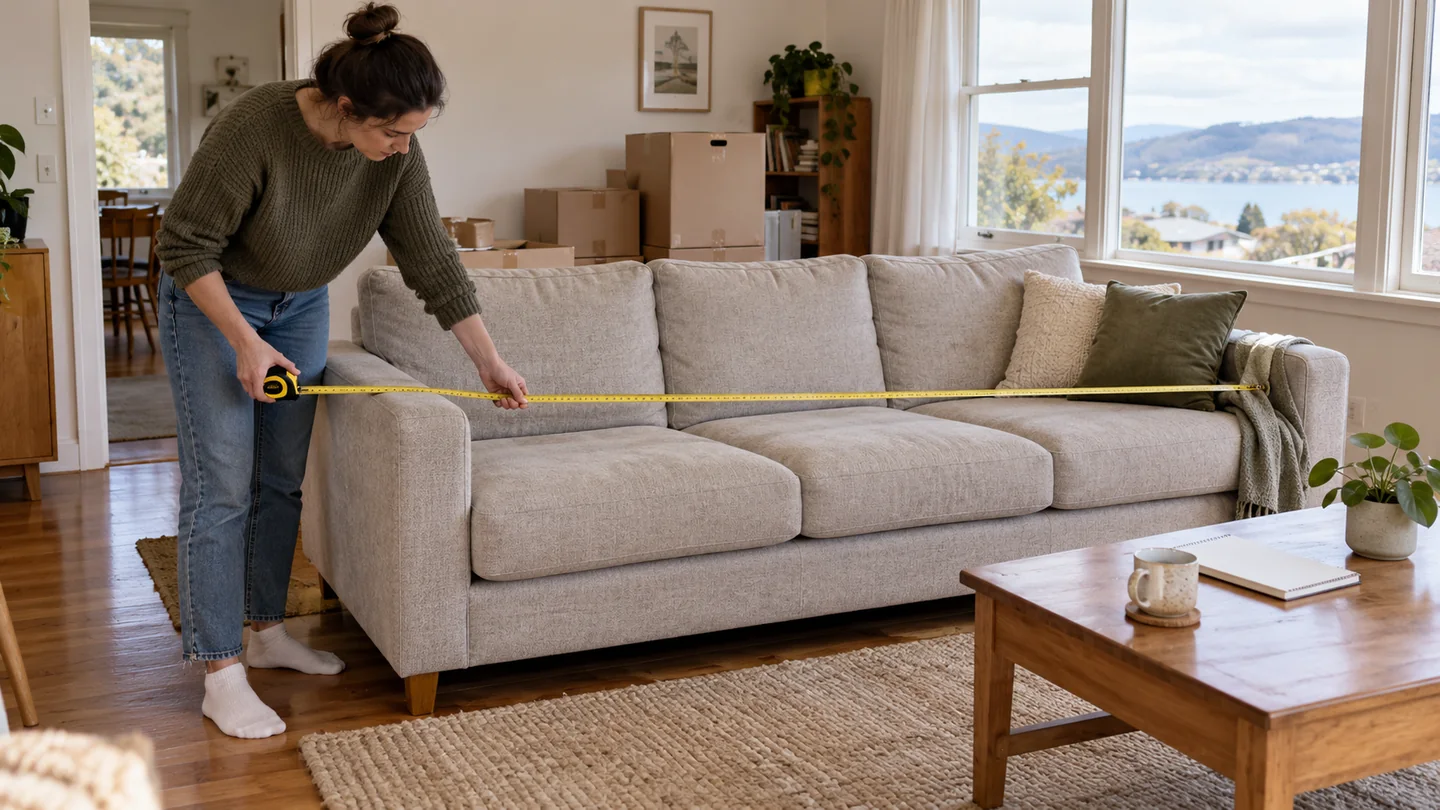
A clear furniture inventory makes a moving quote more useful. Measuring bulky pieces and recording carton quantities helps your removalists assess the load, plan handling and discuss suitable truck space. This furniture volume guide explains how to estimate cubic metres for a Tasmania move without relying on bedroom counts alone.
Use it when moving home in Hobart, relocating from Launceston, booking interstate furniture transport or arranging a smaller backload. The measurements are a starting point for assessment; your moving company still needs to consider furniture protection, stacking, access and the actual loading arrangement. For the wider journey, visit our Tasmania interstate removals guide.
Use outside dimensions
Measure the form in which the furniture or carton will be transported.
Record every item
Include boxes, white goods, outdoor furniture and belongings beyond the bedrooms.
Let the load be assessed
Tell your removalist about fragile, non-stackable or unusually heavy pieces.
What is a cubic metre in furniture removals?
One cubic metre, written as m³, is the volume of a cube measuring one metre long, one metre wide and one metre high. For a rectangular carton or a furniture item’s outside bounding dimensions, multiply length by width by height. If you measure in centimetres, divide the result by 1,000,000 to convert cubic centimetres to cubic metres.
Length × width × height × quantity ÷ 1,000,000 = estimated volume in m³
For example, a sofa measuring 200 cm × 90 cm × 80 cm has an outside bounding volume of 1.440 m³. That does not guarantee it needs exactly that amount of allocated truck space. Its shape, protective wrapping, orientation and whether other goods can safely be loaded around it affect the final moving plan.
Measure the furniture as it will travel
If a bed frame will be dismantled, record the packed pieces and the mattress separately. If a dining table will travel assembled, measure its full outside dimensions. Note removable legs, mirrors, shelves and cushions, but do not assume every item can be dismantled or stacked. Let the removalist confirm what is appropriate.
Measure without moving heavy furniture just to reach an edge. Photographs, product dimensions and accessible measurements can help when an item is awkward. WorkSafe Tasmania’s manual handling guidance explains the risks associated with lifting, carrying and awkward handling.
Single-item furniture volume calculator
Enter the outside dimensions in centimetres and the number of identical items. Use the result in your inventory, then repeat for other furniture or cartons. This tool estimates bounding volume; it does not select a truck, confirm storage capacity or calculate a removal price.
Your measurements stay in this calculator and are not submitted to the removalist.
A worked example for furniture and packed cartons
These are illustrative measurements, not standard sizes or a packing allowance. Measure your own items and use the same units throughout. The table calculates each line before adding the results, which makes the inventory easier to check.
| Item | Dimensions (cm) | Quantity | Total volume |
|---|---|---|---|
| Sofa | 200 × 90 × 80 | 1 | 1.440 m³ |
| Sealed cartons | 40 × 30 × 35 | 6 | 0.252 m³ |
| Packed tabletop | 180 × 90 × 12 | 1 | 0.194 m³ |
| Chairs | 55 × 55 × 90 | 4 | 1.089 m³ |
| Example measured total, rounded to three decimal places | 2.975 m³ | ||
This total describes the measured examples. It is not a promise that the items will fit into 2.975 m³ of truck or storage space. Chairs, delicate surfaces, cushioning, non-stackable pieces and load stability may leave gaps. Do not reduce measurements because you expect your movers to compress or nest the furniture.
If the amount of furniture is changing while you pack, record the date of your inventory and update it before booking. Add newly packed cartons rather than silently replacing the original box count. The box labelling and inventory tips guide helps keep the final list consistent from collection to delivery.
Build a room-by-room moving inventory
Walk through the home in a fixed order and record what will actually be moved. Note furniture dimensions, quantities, carton counts and preparation requirements. Separate belongings travelling with you from those being collected by the removalists.
- Living and dining: lounges, tables, chairs, cabinets, TVs, rugs and boxed ornaments.
- Bedrooms: mattresses, bed bases, dismantled frames, drawers, bedside tables and packed clothing.
- Kitchen and laundry: refrigerators, freezers, washing machines, dryers and packed kitchenware.
- Study and garage: desks, chairs, shelving, tools, equipment and stored cartons.
- Outdoor areas: outdoor furniture, recreation equipment and items that need suitability checked.
For a mainland-to-Tasmania move, record outdoor and garden-related items carefully. Check the official Biosecurity Tasmania moving guidance for cleaning, restricted items and personal effects declarations before deciding what to pack.
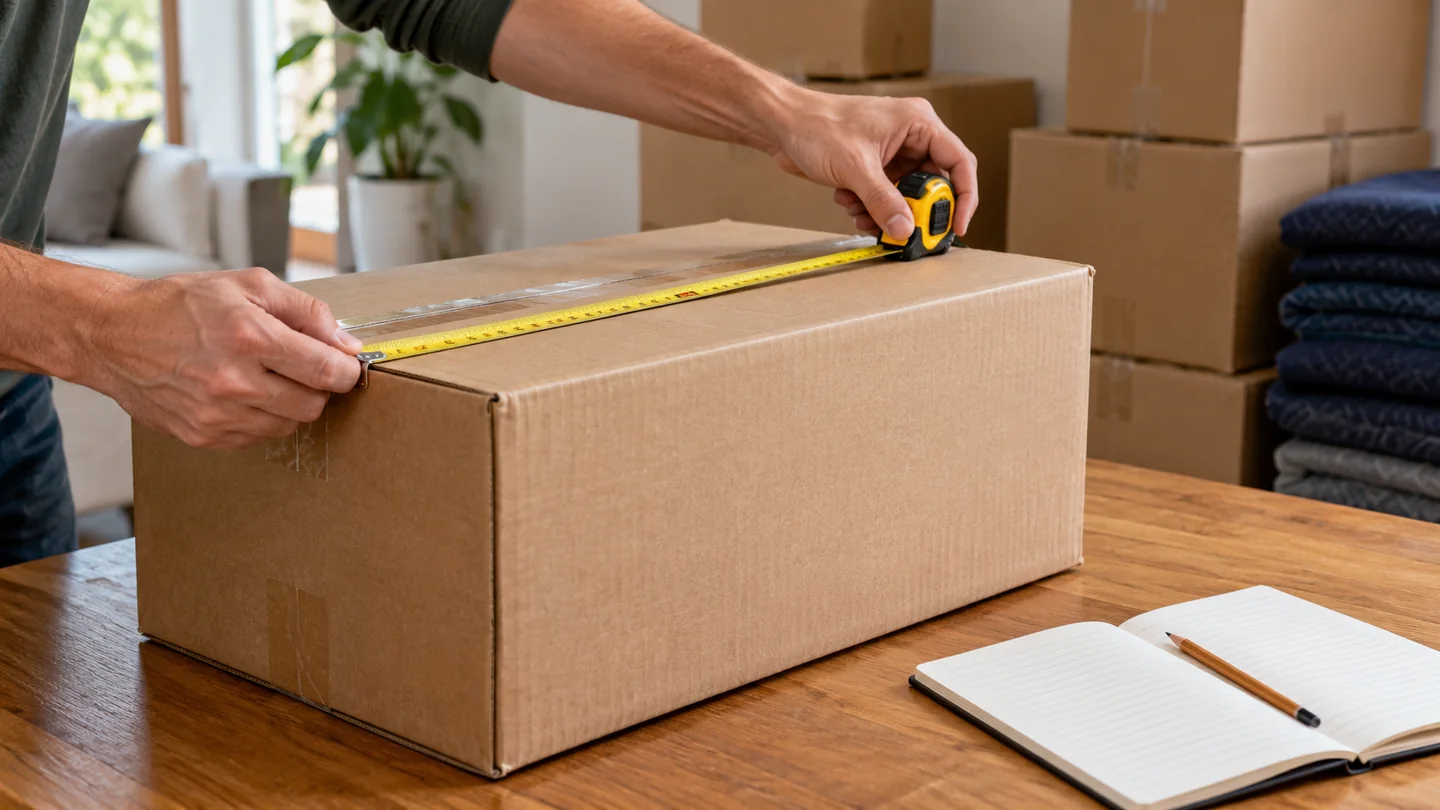
Why measured volume is different from usable truck space
Furniture removals are planned around more than the sum of rectangular measurements. A heavy appliance needs appropriate handling, a mirror needs protection and a fragile cabinet may not be suitable for stacking. A curved lounge or tall wardrobe can occupy space differently from a group of regular cartons.
Provide photos of awkward pieces and explain whether dismantling or protective packing is required. Our packing services and interstate furniture packing advice help connect the inventory with the preparation needed for transport. Avoid adding a guessed universal percentage for packing gaps; ask the provider to assess your actual goods.
Small loads, backloading and interstate furniture transport
If you are sending a few furniture pieces rather than moving an entire household, list them just as carefully. Dimensions and quantities help assess whether a small-load removal or suitable Tasmania backload can be arranged. Truck capacity, route compatibility, handling and date flexibility still need confirmation.
For moves leaving southern Tasmania, see interstate removals from Hobart. For a northern pickup, review interstate removalists from Launceston. Include the mainland delivery suburb and any fixed timing requirement alongside the load list.
Send volume, access and timing together for a useful quote
An inventory gives your moving company a clearer picture of the belongings, but it cannot describe the whole job. Add stairs, lift bookings, narrow doorways, driveway slope, long carries and parking restrictions at both addresses. Note items that are unusually heavy, delicate or difficult to dismantle.
Storage also needs its own assessment. Container dimensions, stacking, access to stored goods and the goods accepted by the provider matter as well as the measured volume. If your furniture needs to be held between properties, include the storage duration and final delivery address when discussing Launceston storage services or other Tasmania storage options.
Use the same inventory when comparing interstate removal quotes. That makes it easier to check the price against a consistent furniture load, transport arrangement and service scope. Ask how the quote changes if you add furniture, request packing assistance or alter the delivery address.
Use your measurements to plan storage
For a load going into storage, take the measurements and item list to our Launceston storage size guide and discuss usable dimensions, stacking and retrieval needs. The Tasmania storage costs guide helps you check the duration, handling, transport and final return inclusions.
Questions about furniture volume and moving loads
How do I calculate furniture volume in cubic metres?
Using centimetres, multiply outside length by width by height by quantity, then divide by 1,000,000. For example, a 200 cm by 90 cm by 80 cm sofa has a bounding volume of 1.440 cubic metres before the loading arrangement is assessed.
Can I estimate my moving load from the number of bedrooms?
Bedroom count is useful background but is not a reliable inventory on its own. Record furniture, appliances, carton quantities, garage contents and outdoor goods. Households with the same number of bedrooms can have different loads.
Does the calculator tell me which truck to book?
No. The calculator estimates outside bounding volume. Furniture shape, protection, stacking, weight, access and load stability affect actual truck space. Your removalist needs to assess those details before confirming the transport arrangement.
Should I measure a bed or table before or after dismantling?
Record the form in which the item will travel. If dismantling is planned, list the packed pieces separately and record the mattress, legs or other components as needed. Confirm dismantling and reassembly requirements with the removalist.
Do I need to measure every moving carton?
Measure each carton type and count how many cartons use that size. Multiply the volume by the quantity, then repeat for other sizes. Include the final box count in your inventory and update it as packing progresses.
Is measured furniture volume the same as storage space?
Not necessarily. Stacking, protection, access to belongings, container dimensions and restrictions on goods also matter. Use your measurements and item list to discuss the storage arrangement rather than assuming an exact fit.