Office furniture storage in Launceston
Keep desks, chairs, cabinets and workstation components connected to the business’s clearance and return plan.

Connect office storage to the business project
Office furniture storage in Launceston can be discussed as part of a refurbishment, relocation or temporary clearance. Start with the furniture, the work areas being cleared and the dates when the business needs those spaces.
Tas Removals & Storage can assess a business furniture storage enquiry alongside office furniture removals and later delivery. A clear project brief helps the team understand the proposed collection, handling and return work, while the business keeps control of its own equipment and operational arrangements.
Office refurbishment storage and office relocation storage may have different return priorities. A refurbishment might return furniture to the same rooms in stages; a relocation may need a new layout and address. Identify the actual destination rather than treating temporary office storage as a complete plan by itself.
Use the Launceston office removalists service for the moving enquiry and the Launceston furniture storage overview for storage. This guide connects those services through a practical office storage enquiry brief.
Build a commercial furniture and component inventory
A commercial furniture inventory should identify desks, chairs, tables, cabinets and separately packed components. Use item numbers, dimensions, condition photographs and the intended return room. Count the physical pieces rather than relying on the number of employees.
Desk storage planning needs the desktop, legs, modesty panels and any other components described. A chair storage inventory should distinguish different designs and identify damaged parts. Meeting table storage needs its complete size, detachable sections and preparation requirements recorded.
A cabinet storage enquiry should describe the furniture separately from its contents. Tell the team about glass, loose shelves, fixed fittings and heavy or unusual pieces. Emptying or managing business records and other contents is work to organise explicitly rather than assume is included.
Workstation storage benefits from workstation component labels that remain with each group. Keep fittings associated with the correct item and note any parts retained by the business. The inventory and labelling guide and furniture volume guide help describe the load accurately.
Define furniture preparation and workplace equipment scope
Office furniture dismantling and reassembly of office furniture should be assessed for the actual models and agreed in the quote. Retain manufacturer instructions, identify fixed components and record the hardware. The furniture disassembly guide supports this preparation brief.
A workplace equipment inventory should separate furniture from computers, communications equipment, records and other business assets. Send an IT equipment suitability enquiry if those items are part of the request. Coordinate shutdown, disconnection, data handling and later reconnection with the people responsible for that equipment.
Discuss confidential document exclusions and other items requiring a different arrangement before collection. This furniture-storage enquiry does not establish a specialist records archive, managed IT service or stock fulfilment service. Keep sensitive materials under the business's own documented process and ask the team to confirm the transport and storage scope.
Business furniture condition records should show existing marks, repairs and incomplete components. Tell the team about difficult pieces before the quote is finalised. Furniture handling for offices needs to reflect the load and route, rather than a generic assumption that all desks and cabinets can be treated alike.
Coordinate building approvals and the collection route
Office access approvals may involve a building manager, landlord, facilities contact or loading-area booking. Confirm who is responsible and what restrictions apply. Building manager coordination should happen before the collection date is relied on.
A loading dock appointment needs the usable time window, vehicle approach, distance to the office and any site induction or protection requirements communicated to the team. Describe lift dimensions and restrictions as well as office stair access. Give photographs of narrow turns and large pieces.
The furniture route measurement guide helps assemble those details. Safe Work Australia's manual-task guidance is an official reference for handling risk. Keep working routes clear and coordinate the furniture move with the work happening on the site.
Staff disruption planning should distinguish the business's opening or operating requirements from the removal booking. Give the fixed access constraints and discuss the assessed schedule. This page does not promise after-hours work, a particular crew or uninterrupted business operation.
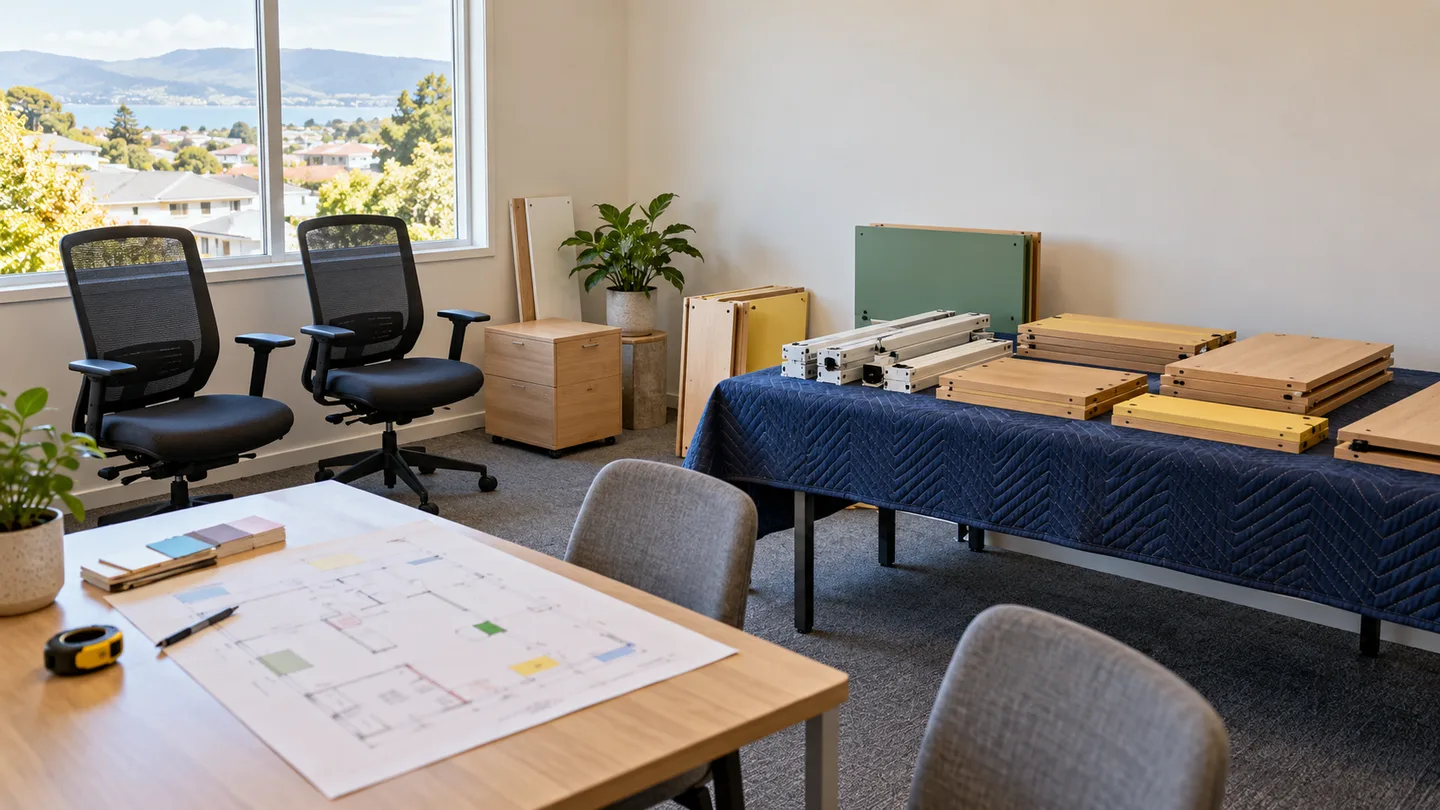
Plan duration, access and retained furniture
Short-term business storage should have an expected duration and a review point. Long-term furniture storage needs the same inventory and authority records, especially if the layout or nominated business contact may change while the goods are stored.
For storage for surplus desks, decide whether the business intends to retrieve them, return them to the same premises or send them to another address. Storage retrieval for businesses needs an item list and an authorised business contact who can provide instructions.
Use the storage arrangement comparison to discuss loading and access responsibilities. Office contact hours do not establish unrestricted storage access. Check appointments, notice, handling and authority for the actual arrangement.
If furniture storage duration changes because the refurbishment or relocation is delayed, use the storage extension checklist. Keep the revised dates and scope in writing. Ask about availability, billing and any change to the return delivery instead of assuming the original arrangement carries on automatically.
Plan the return sequence for workstations
Staged office furniture return starts with the items needed for the first usable work area. A return sequence for workstations should connect each desk or table to its components, fittings, room and authorised receiving contact.
Office furniture redelivery needs a confirmed address, access and room readiness. Updated layouts, new partitions or altered loading access can change the handling from the original collection. Send fresh photographs or measurements when the route has changed.
The storage access and redelivery guide helps describe partial retrieval and later delivery. Confirm whether each stage involves separate handling, transport or reassembly work. A phased business reopening does not automatically mean that multiple furniture deliveries are included in the first quote.
A practical example is returning meeting-room furniture before surplus workstations. Identify the first item group, what remains stored and the later destination. At each agreed return, check components against the inventory and record concerns promptly. This keeps the business's own setup work connected to the actual goods received.
Prepare a business storage quote brief
A business storage quote should identify the furniture, collection and return addresses, storage duration, access approvals, preparation, handling and staged return requests. Check business storage inclusions for materials, collection, storage, retrieval, delivery and any assembly.
Our storage costs guide and the ACCC's price-display guidance help frame the total-cost questions. Check the written scope using ACCC contract information where useful.
For a commercial move-and-store enquiry, link the furniture brief to the office and commercial relocation service. The business relocation checklist supports the wider coordination tasks.
Tas Removals office storage enquiries can begin with the practical project: which areas need clearing, which goods leave, when the rooms become ready and what should return first. Tas Removals & Storage can assess the furniture work using that brief and confirm the proposed arrangement before the business plans around it.
Questions about this service
Can I request storage for office furniture in Launceston?
Provide an inventory, addresses, duration, access and the collection or return work needed. Tas Removals & Storage can assess the request alongside its office removal and furniture storage services. Confirm suitability, scope and availability before relying on the arrangement.
What should be included in a workstation inventory?
List furniture and components with item numbers, dimensions, condition and the intended return room. Identify fittings and instructions, and record parts retained by the business. Keep computers, records and other equipment in separate scope lists.
Does furniture storage include records or managed IT services?
This guide does not establish specialist records archiving, managed IT or stock fulfilment services. Explain any equipment or sensitive-material request separately and obtain confirmation of scope. Coordinate data, disconnection and records handling through the business’s own responsible people.
Can office furniture be returned in stages?
Ask for the proposed stages to be assessed using an item list, room readiness and access details. Retrieval, separate trips and reassembly may affect scope and cost. Identify the remaining stored goods after each agreed return.
What access details are needed for an office collection?
Provide loading-area arrangements, approved time windows, lift dimensions, stairs, carry distance, site requirements and the building contact. Include photographs and dimensions for bulky items and confirm the access approvals before booking.
What if the refurbishment or office relocation is delayed?
Contact the team with the booking details, revised estimate and uncertainty. Ask about an extension, billing, availability and changed return work. Keep written confirmation with the inventory and appoint an authorised contact for later instructions.
Discuss your plan with Tas Removals & Storage
Turn your moving plan into a useful enquiry
Send the item list, addresses, dates and access details with the tasks you would like help with. Tas Removals & Storage can assess the proposed work and discuss a service scope that reflects your belongings and practical priorities.
Prefer email? Send your brief and photographs to info@tasfurnituretransport.com.au. Confirm the assessed scope and booking before coordinating other appointments around it.