
Pack for a long-distance interstate removal from Tasmania — because it’s a real transport job.

Pre-pack services vs DIY packing for interstate removals: where most moves win (or fall apart)
The big difference between DIY packing and professional pre-pack services isn’t effort — it’s consistency and transport-standard protection. DIY can work well if you start early, use the right cartons, and stick to one system room-by-room. Where DIY packing usually goes wrong is predictable: mixed boxes, under-filled cartons that crush, over-filled cartons that split, rushed taping, and fragile items “wrapped later” (which often means never).
Tas Removals & Storage pre-pack teams pack to interstate removalist standards so cartons stack properly, fragile goods are cushioned correctly, and furniture protection is consistent across the whole load. That reduces loading delays, improves load stability for the Bass Strait stage, and lowers the chance of damage caused by shifting, rubbing, or compression. If you want the safer, smoother option, add packing help from Tas Removals & Storage to your plan. Before you compare options, it’s also worth checking what’s included in the home moving service so pickup day doesn’t come with surprises.
- Professional packing reduces breakage risk and helps the pickup run on time because cartons are consistent, stackable, and safely weighted.
- DIY works best when you keep box sizes consistent, label properly, and avoid last-minute “stuff it anywhere” packing.
- If you’re short on time, a partial pre-pack (kitchen, fragile items, garage) often delivers the best value without packing your whole house.
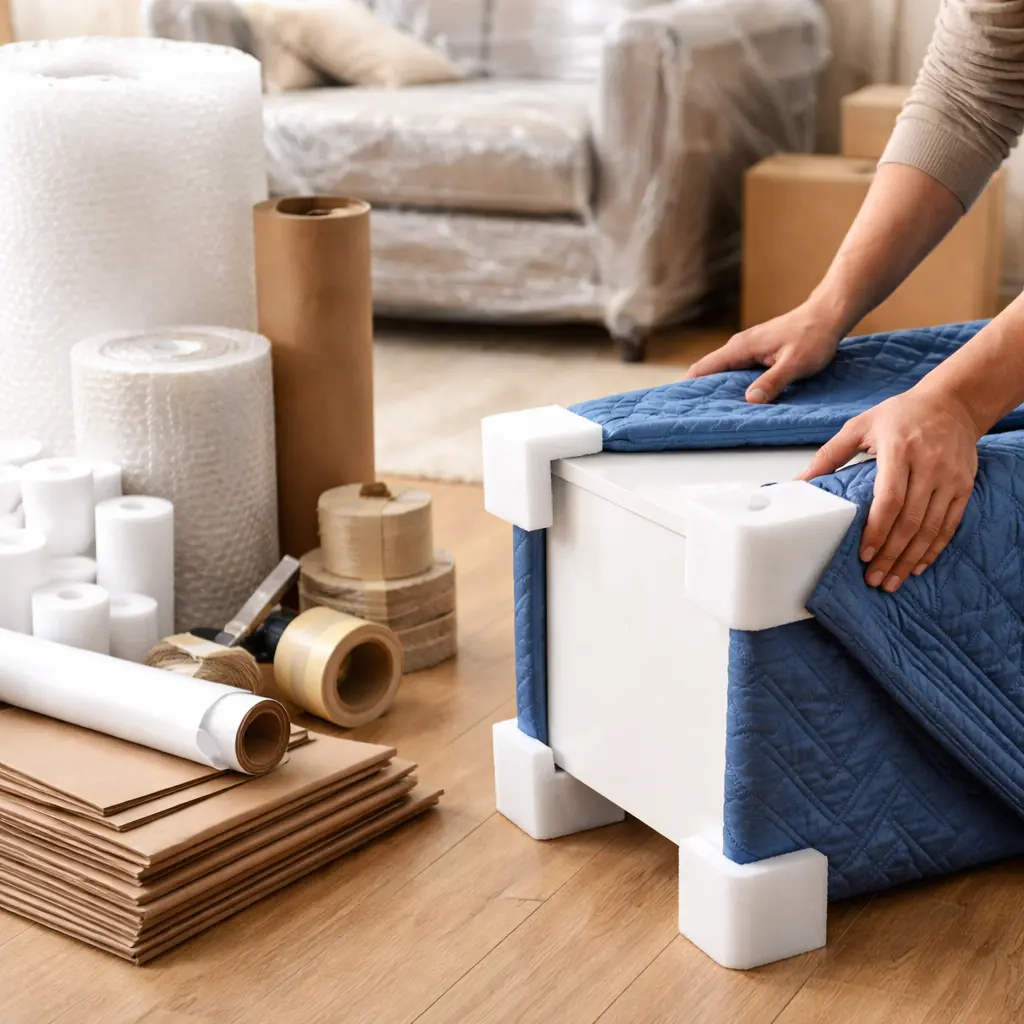
Interstate packing materials that actually protect furniture and cartons on a long haul
Long-distance furniture transport is hard on weak packing because it introduces vibration, stacking pressure, and repeated handling. Your goal is simple: stop movement, reduce rubbing, and protect impact points (corners, edges, glass, and glossy finishes). Strong cartons, proper wrap, and corner protection do more than “extra tape” ever will — especially when your load is stacked and secured for a long interstate trip.
Use rigid, moving-grade cartons for household goods, and avoid supermarket boxes for heavy items (they crush and collapse under stacking). For furniture, protection is about managing friction: wrap surfaces that mark easily, protect corners, and keep items stable so they don’t shift against each other. If you’re packing yourself, follow these practical packing tips and apply the same standard across the whole house (your sofa shouldn’t be wrapped like Fort Knox while the bedside tables get a single sad towel).
- Use rigid cartons and solid edge protection for scratch-prone surfaces, glass, and high-gloss furniture.
- Keep heavy items in smaller boxes so stacks stay stable and safe to lift (books and tools belong in small cartons).
- Don’t leave empty space in boxes — void fill prevents rattling, shifting, and crushed corners during transit.

Fragile packing for interstate removalists: protect against vibration, stacking pressure, and time in transit
Fragile items need a different mindset — you’re packing for vibration, stacking pressure, and hours (or days) in transit, not just “a careful drive.” The biggest causes of damage are movement inside the carton, unsupported corners, and cartons that are too heavy to handle safely. Use rigid protection, add proper cushioning, and remove empty space so nothing can shift or rattle.
TVs and PCs need screen protection and simple cable control so accessories stay with the right device at delivery. Artwork, mirrors, and glass should be wrapped properly with edge protection (blanket-and-hope doesn’t cut it), and glassware should be layered with padding so pieces can’t knock together. If you’ve got high-value or awkward pieces, it’s smart to check the specialty item transport guide so handling requirements are planned early rather than improvised on the day.
- Fill voids inside boxes so items can’t shift or rattle — movement is what breaks fragile goods in long-distance transport.
- Keep fragile cartons light — overweight “FRAGILE” boxes get dropped, dragged, or stacked incorrectly.
- Use clear “FRAGILE / THIS WAY UP” labeling, and pack like the carton may be stacked (because it probably will be).
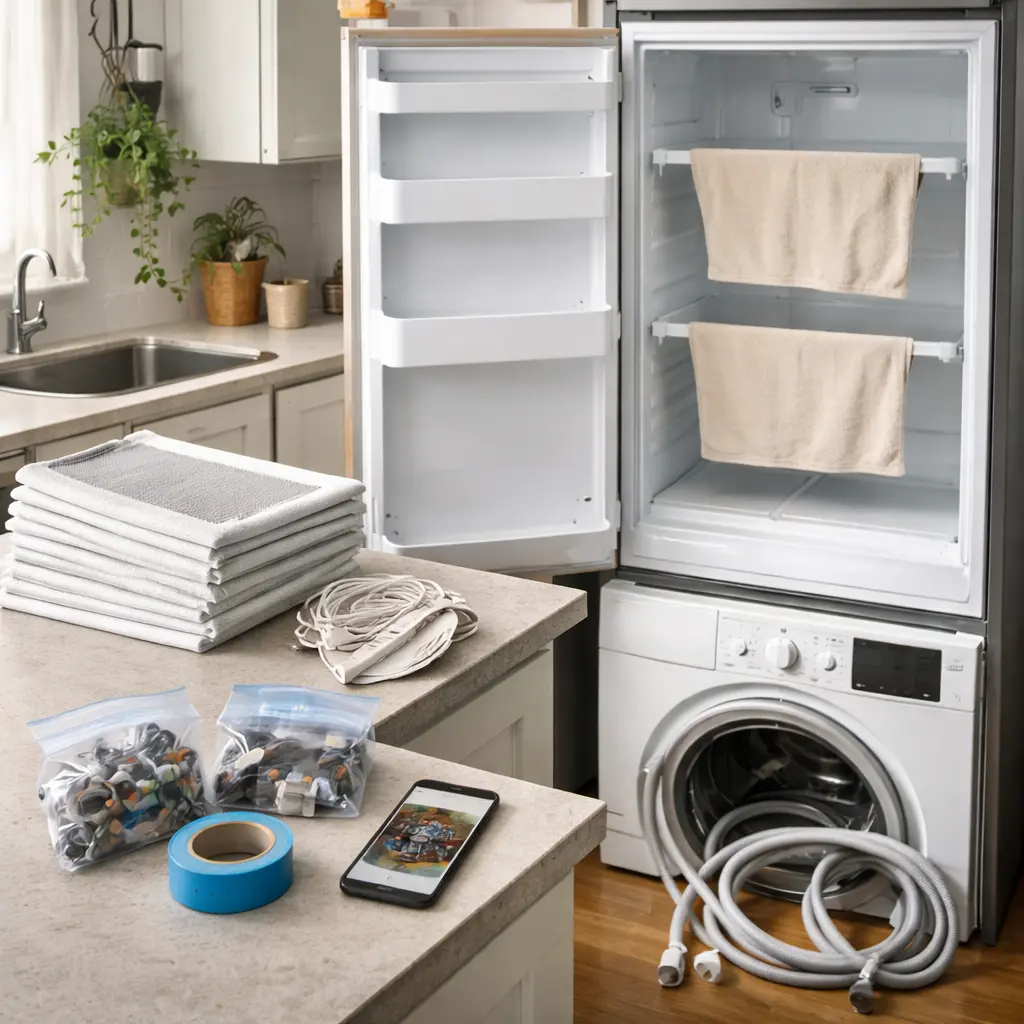
Whitegoods and electronics moving prep: prevent pickup delays and protect high-risk items
Whitegoods and electronics aren’t just “heavy items” — they’re the ones that cause delays if they’re not ready, and they’re also high-risk if they’re transported incorrectly. For fridges and freezers, the priority is empty, defrost, and dry to prevent water leaks, mould smells, and internal damage. Remove loose shelves and drawers, and secure doors so they don’t swing during handling.
For electronics, unplug early, take quick photos of cable setups, and pack accessories together so nothing goes missing at the other end. TVs and monitors should have screen protection and stable boxing where possible. If you’d rather keep this simple, you can add packing services to your booking and align expectations with the home moving services overview.
- Defrost fridges early and leave doors slightly open once dry to prevent odours and trapped moisture.
- Bag remotes, leads, and brackets — label the bag and tape it to the device so it arrives with the right item.
- Drain washing machines where possible, and secure hoses so they don’t snag or leak during loading/unloading.

Interstate removals labelling and inventory system: faster loading, safer stacking, easier delivery
Labelling isn’t “nice-to-have” — it’s a speed and safety tool for interstate removalists. Clear labels help stacking stay sensible (so fragile cartons don’t end up under heavy boxes), reduce double-handling, and make delivery placement faster. A simple inventory list also stops essentials vanishing into box-land and helps you track what’s been packed, what’s still out, and what needs priority at delivery.
Use a room-based label system (Kitchen, Main Bedroom, Garage) plus a priority number (1–3). That way Tas Removals & Storage can load and unload more efficiently, and you can set up your home faster when you arrive. Tie your packing plan back to the interstate moving checklist and keep the delivery timelines nearby so your packing schedule matches the bigger plan.
- Label boxes with room + priority (1–3) so unloading is quick, logical, and doesn’t block access in the new home.
- Mark “FRAGILE” and “THIS WAY UP” clearly on glass and electronics cartons, and keep them a sensible weight.
- Keep an “essentials list” for first-night items so you can locate bedding, chargers, toiletries, and basic kitchen gear quickly.
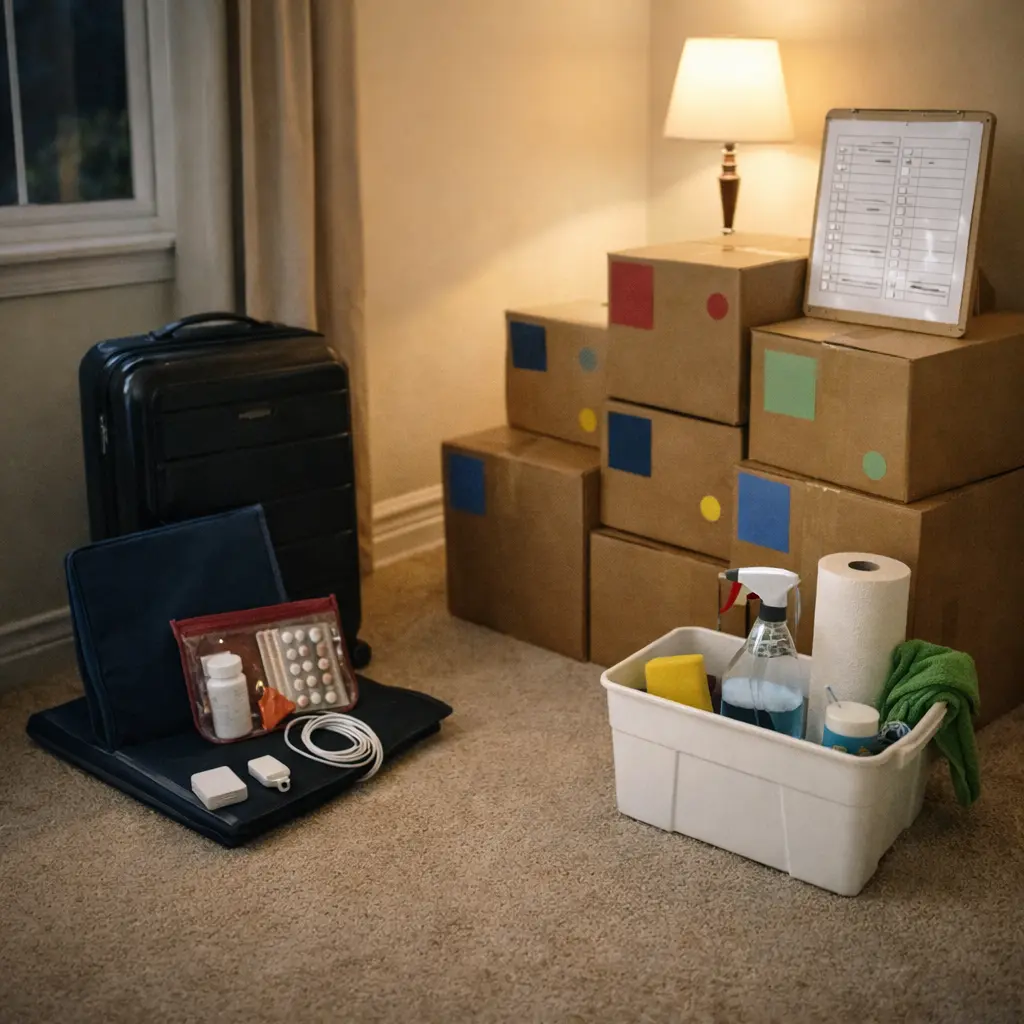
The final week before pickup: an interstate moving countdown that prevents last-minute chaos
The last week is where good intentions either become a smooth move — or a 2am box-taping festival. The best strategy is to pack in the order that reduces disruption: storage areas first (shed, garage, spare rooms), then non-essential zones, then daily-use items last. Keep everyday living simple by running down pantry and freezer food, minimising clothing options, and keeping cleaning gear and toiletries accessible.
Use the final days to confirm access details (stairs, lifts, parking, loading zones) and make sure walkways are clear for the removalist crew. If your dates are shifting, build a sensible fallback with Storage Tasmania so you’re not stuck waiting on keys. For the bigger picture of why timing and packing quality are linked, the Bass Strait logistics guide is a handy reference.
- Pack non-essentials early; leave kitchen and daily-use zones until last so the household can still function.
- Confirm the pickup window, parking plan, and nominated contact details, then keep walkways clear on the day.
- Set aside a “do not load” area for documents, valuables, medication, and first-night essentials.
Tas Removals & Storage - Services
We want to help you move and while doing so, providing you with the best price and outcome of any move around Tasmania. We also provide backloads to Tasmania from anywhere in Australia.








Testimonials

The customer service was great. We got an affordable quote and the whole process from pickup to
delivery was a success! My partner and I are very happy with the outcome and would like to highly
recommend Tas Removals and Storage!

Tas Removals moved us from Hobart to Launceston. We couldn’t have asked for a better moving company.
Affordable, quick and effective at everything they did. Handled everything with care and made the
whole process quick and easy!
We were dreading the whole moving process. After several quotes, we spoke to TAS Removals and Storage
and decided to go with them. They communicated well and we have a slight delay, but it all worked
out really well in the end. Highly Recommended moving company!!!
These guys were great! Competent would be an understatement. They went above and beyond by hiring
more guys to help with our large move! We moved into a new home with a very long steep drive way!
They moved everything carefully during the whole process! Nothing was broken and we were extremely
happy with the overall process.
We were excited about moving. Then when it come to packing and organising everything outlined by
tas removals we got scared the whole thought process becoming daunting! They told us they could
pack everything and get it ready for the move. So we did that and it turned out great! Highly
recommended local Tassie removal company right here!!!
My wife found these guys online and I thought we would give it a go. The staff members we dealt
with were very good at communicating. Nothing was broken and everything was picked up on time and
delivered on time. Would use these guys again!
As a single man with not a lot of things. I have moved a lot over the years and I must say that
these guys were GREAT!!! Cheap, professional and the communication was good! When I move again
I will be sure to look these guys up and I would recommend you do the same
Tas removals did a backload from Yarrawonga to Hobart. We had a large amount of furniture to bring
and these guys were good! They handled everything carefully as I had a lot of antique furniture.
Everything was wrapped and wrapped again and then when they loaded it all on the truck it was
wrapped again with blankets of some sort. Awesome job guys! Highly recommended.
Tas Removals and Storage are an awesome company. Friendly and professional, they really cared about our move.
I can be quite pedantic about certain things but the overall move was a great success!