Piano removals in Tasmania
Move your piano with a plan for the instrument, the route through both homes and its new position. Talk to us about collection, protection and delivery in Tasmania.
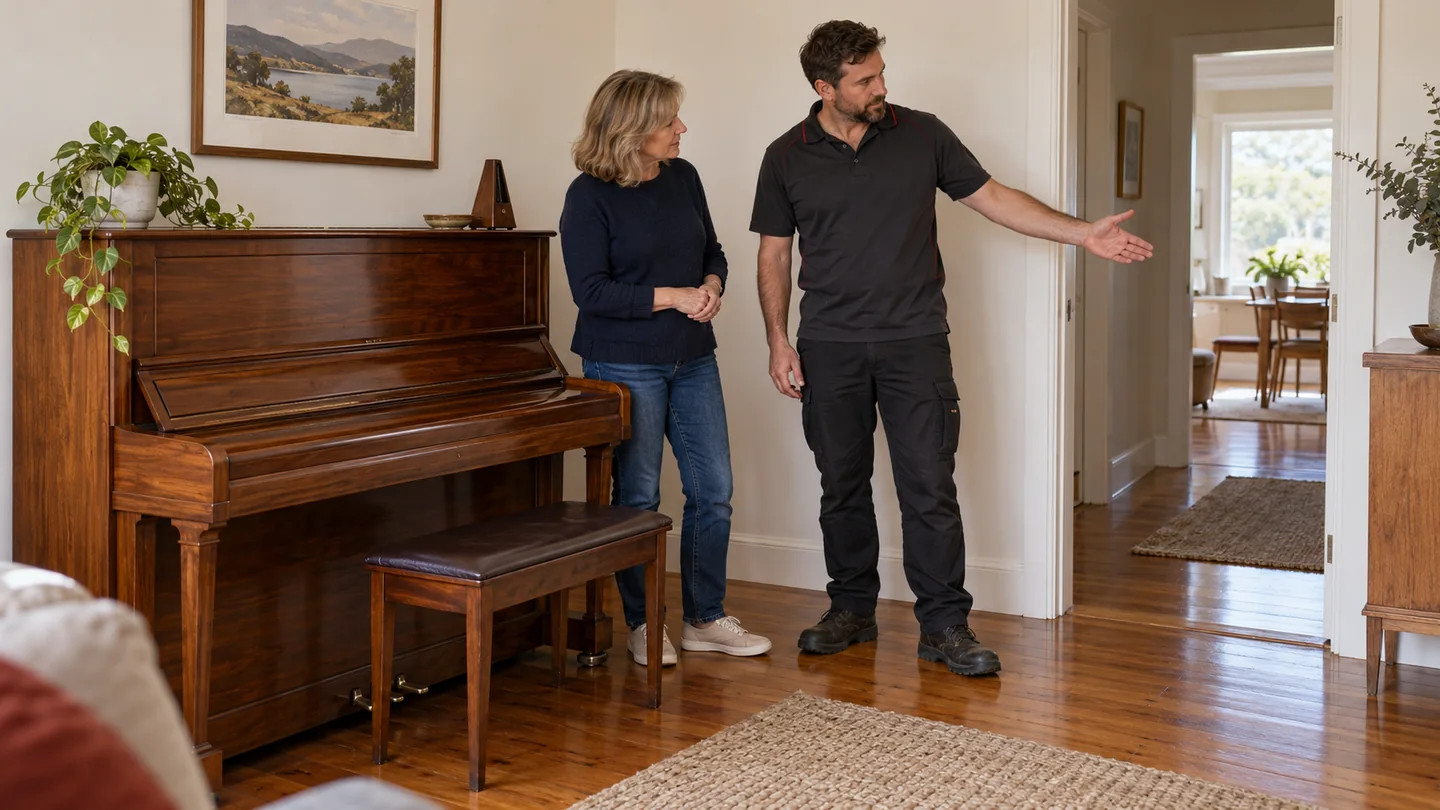
Piano removals planned around your instrument and your home
A piano often carries more than its price tag. It might be the instrument your children learned on, a family upright you have inherited, or a grand you have finally found room for. Getting it to the next home starts with understanding the piano and the path it needs to take.
Tas Removals & Storage helps organise piano removals in Tasmania, including enquiries for a single instrument and pianos moving with a household. Tell us what you have, where it is going and what the access looks like. We can work through the collection, protection and delivery details before the moving day is booked.
Our Tasmanian specialty-item moving services cover the wider handling enquiry. This page focuses on the piano: its type, existing condition, entry route and final position. If paintings or glass pieces are travelling too, list them separately using our artwork, mirror and glass furniture moving guide.
Upright, grand, baby grand or digital: describe the actual piano
Start with a front photograph, the make and model if known, and the outside dimensions. A model plate or an existing purchase record can help; there is no need to open the instrument or move it just to find a serial number. Share a manufacturer weight if you have one rather than guessing.
Swipe or scroll sideways to read the full piano enquiry table.
| Instrument | Useful details to send | Work to discuss |
|---|---|---|
| Upright piano | Width, depth and height; make or model; condition of the case, feet and castors. | Route from its current position, protection and placement at the destination. |
| Grand or baby grand piano | Overall length and width, model, photographs and any previous moving information. | Suitability for the route, handling equipment, and who will do any necessary dismantling and reassembly. |
| Digital piano | Cabinet or portable model, stand, pedal unit, cables and manufacturer instructions. | Whether parts detach, how they will stay identified, and protection for the keys and electronics. |
| Older or restored instrument | Known weak parts, loose fittings, repairs and a technician's existing advice. | Whether extra preparation is needed before it can travel. |
Include the piano stool or bench, music stand and other accessories in the inventory. For grand piano removals and baby grand piano moving, get the proposed handling and any component work confirmed for your particular instrument. A description such as “small piano” does not tell the team enough.
Show the whole access route at both addresses
For a Hobart piano move, a steep driveway and front steps may matter more than the distance across town. A Launceston piano collection might have a wide front door but a tight turn inside. Photograph the route from the piano to the likely loading position, and do the same from the delivery entrance to its new room.
- Include doorways, corridors, corners, thresholds and verandas.
- For piano removals with stairs, show the full flight, landings, turns and handrails. Give the number of steps and the floor level.
- For an apartment, provide lift dimensions, the building's moving rules and any lift-booking requirements.
- Show parking, driveway slope, gravel, gates, overhead obstructions and the distance from vehicle access to the door.
Use our furniture and doorway measurement guide to organise measurements with the photos. These details support a handling decision; they do not prove that a piano will fit safely.
Let the team determine the people, equipment and method needed. WorkSafe Tasmania's hazardous manual tasks guidance explains why handling risks need proper planning. If a route may need lifting equipment or property alterations, settle that plan before collection.
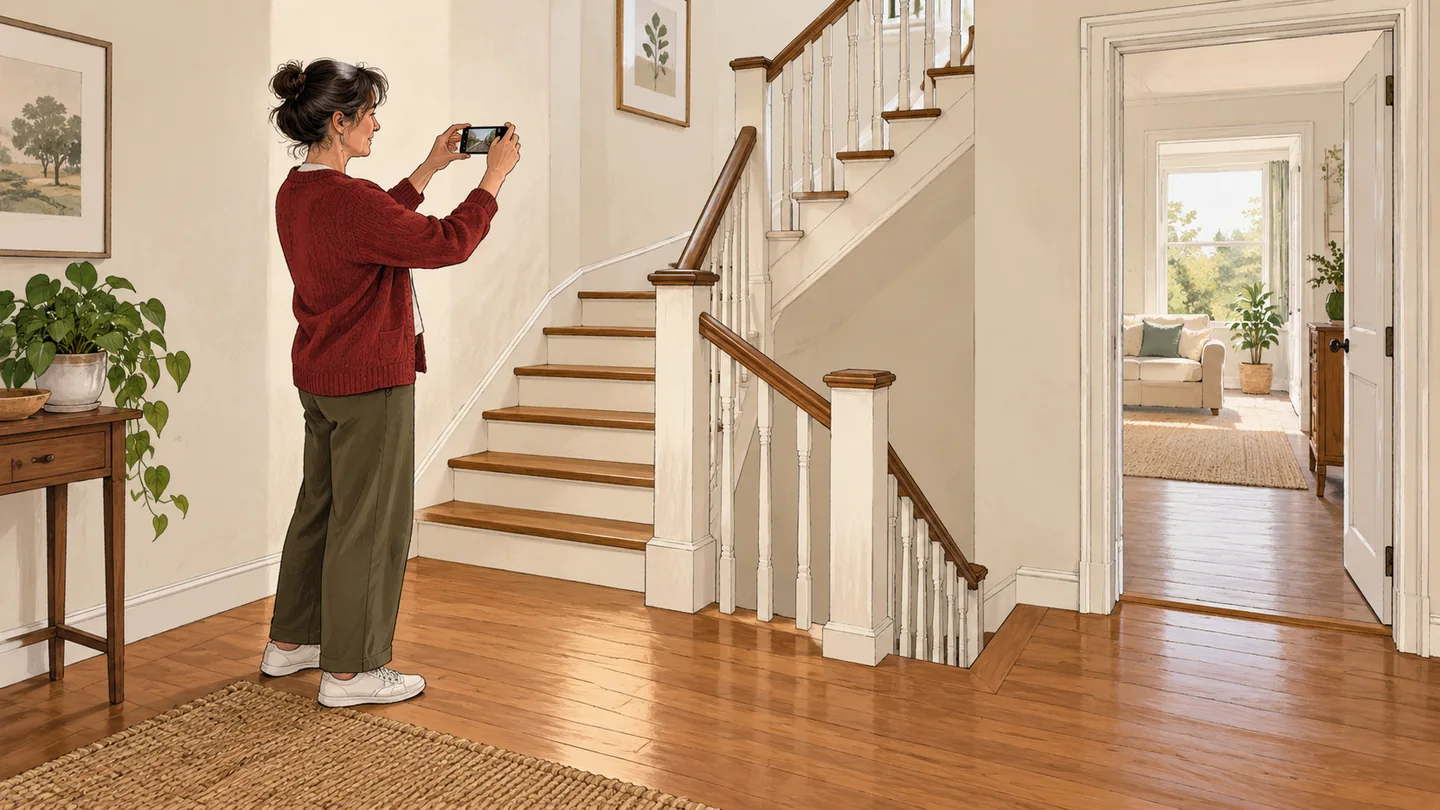
Prepare the room without trying to move the piano yourself
Remove music, ornaments and loose belongings from around the instrument. Set aside the accessories agreed for the load, and clear the walking route of ordinary household clutter. Keep children and pets away from the working area on moving day.
Do not test the route by rolling an upright across the room on its castors. Do not tip a piano, remove grand piano legs or improvise a stair move to make collection easier. Tell us about loose feet, unstable parts or existing damage and leave the handling preparation to the people doing the job.
Photograph the piano's visible condition before collection, including existing marks on the case and any known damage. Record whether there are current problems with keys or pedals. This gives everyone a useful starting point without turning a moving enquiry into a repair diagnosis.
If you are buying a second-hand piano, have the seller identify the instrument, permit collection and provide access photos. A free piano can still have a difficult route or need repairs. A piano technician can advise on the instrument's condition before you commit; the transport quote covers a different decision.
Local piano transport, regional moves and household collections
Give both suburbs and postcodes, whether the enquiry is for piano movers in Hobart, piano removals in Launceston, or a regional journey involving Devonport, Burnie or another Tasmanian town. Rural access deserves the same attention as indoor stairs. The address and photographs let us discuss the actual journey and available booking.
A piano moving with your household still needs its own inventory entry. Include its size and handling needs in the Tasmanian furniture removal enquiry so it can be planned alongside the rest of the load. For piano relocation within the same building, describe both rooms and any change of floor; a short distance does not remove the access work.
For interstate piano transport involving Tasmania, send the complete origin and destination, requested dates and receiving contact. Our interstate specialty-item removals guide helps with the wider journey. Have piano acceptance, packing, handovers and timing confirmed for that booking before committing to a seller's collection deadline.
Where a school, venue or shared building is involved, name the person who can authorise access and placement. Include opening hours and any restricted entry times, and nominate a receiver who knows which room the instrument belongs in.
Choose the new position, then plan aftercare and any storage
Have the receiving room ready
Choose the intended position before delivery and explain it to the receiving contact. Clear that space and its entry route. Ask your piano manufacturer or technician about placement away from direct sun, heating vents and other sources of changing conditions. Yamaha's piano maintenance advice explains the importance of the room environment and professional servicing.
Piano tuning after moving
Check the visible condition after delivery and raise any concern promptly. For an acoustic instrument, discuss tuning and any changed key or pedal behaviour with a piano technician. Ask when a visit suits your instrument and the new room; there is no single waiting period that fits every piano. Tuning, regulation and repairs are separate from transport unless specifically included.
If the piano needs storage between homes
Explain the expected gap, the instrument's needs and its later destination before collection. Ask what storage location and conditions are proposed, who will handle it, and how redelivery is priced. Have suitability checked with your technician where needed. Our packing for furniture storage guide covers the broader household preparation, but a piano needs its own discussion about environment and handling.
Get a piano removal quote with the important details included
Piano removal costs depend on the instrument, route, access and requested work. A price for a ground-floor upright collection cannot tell you what a grand on a turning staircase will cost. Send a useful enquiry first, then compare what each quote actually includes.
- The instrument: type, make, model, dimensions, photos, known condition and accessories.
- The journey: both addresses, access photos, steps, lift or building restrictions, parking and the chosen receiving room.
- The dates and people: preferred collection, any firm deadline, seller permission where relevant and a receiving contact.
- The requested work: protection, any dismantling and reassembly, room placement, storage and later delivery.
- The price and terms: inclusions, additional access costs, minimum charges if applicable, and what happens if dates or access change.
Ask about insurance for the named piano during collection, transport, any storage and delivery. Check who provides any cover, the value accepted, limits, exclusions and excess. Moneysmart's contents insurance guide helps explain policy questions; a home policy or a carrier's liability should not be assumed to cover every moving situation.
The ACCC's guidance on understanding service contracts is useful when reviewing the booking terms. Send Tas Removals & Storage the photos and addresses, and we can discuss the piano move you actually need.
Questions about piano removals in Tasmania
Can Tas Removals & Storage help with piano removals in Tasmania?
Yes, send the piano type, photographs, dimensions, both addresses and dates. Describe access and the intended receiving room. Tas Removals & Storage can discuss the piano collection and delivery, including a single instrument or one travelling with a household, and confirm a suitable booking.
Do upright, grand and baby grand pianos need different moving plans?
Yes. Their shape, components, condition and access affect the work. Provide the make and model if known and the actual dimensions. Have the handling method, any dismantling and reassembly, equipment and route suitability confirmed for the particular instrument before collection.
Can a piano be moved up or down stairs?
Send photographs of the full flight, landings, turns and handrails at both addresses, along with the floor levels and piano details. The team needs to determine whether a suitable handling plan is possible. Do not assume stairs, hoisting or property alterations are included in a standard collection.
How much do piano removals cost in Tasmania?
The quote depends on the instrument, journey, access and requested work. Include photos, dimensions, dates, accessories, storage and placement needs. Ask about protection, component work, additional access costs, minimum charges if applicable, and the terms for changed dates or access. There is no universal price in this guide.
Can you collect a second-hand piano from a seller?
Include the seller’s permission, contact details, collection address, access photos and available times. Have the instrument and collection plan confirmed before promising a pickup date. A technician can advise on the piano’s condition before purchase; that advice is separate from the transport enquiry.
Can the piano travel with the rest of my furniture?
Include it as a separate inventory entry with its type, dimensions, photos and access needs. Explain any accessories and the destination room. The piano handling and protection should be discussed explicitly rather than assumed to be covered by a general household furniture list.
When should an acoustic piano be tuned after moving?
Ask a piano technician when tuning suits your instrument and its new room environment. Report any changed key or pedal behaviour. A fixed waiting period does not fit every piano, and tuning, regulation or repairs are separate from transport unless specifically included in the booking.
Can a piano be stored between homes?
Request storage before collection and explain the expected period, piano requirements and later destination. Confirm the proposed location, conditions, handling, charges and redelivery. Seek your technician’s advice on suitability where needed; do not assume a general furniture-storage option offers the environment your instrument requires.
Tell us about your piano and where it is going
Send Tas Removals & Storage the piano photos, type, dimensions and both addresses. Add stairs, dates and the receiving room so we can discuss the collection and delivery you need.
Prefer email? Send your item list and photographs to info@tasfurnituretransport.com.au.
Useful services and moving guides
Artwork, mirrors and glass furniture
Identify the fragile pieces travelling with your instrument.
Furniture removals in Tasmania
Include the piano in a wider household move.
Furniture and doorway measurements
Describe the instrument and the complete access route.
Prepared for Tas Removals & Storage, 14 October 2026. Official resources linked in this guide were checked during preparation.