Internal office moves in Tasmania
Move desks, cabinets and meeting-room furniture within your existing premises. We can help plan the move around your layout, access and working hours.
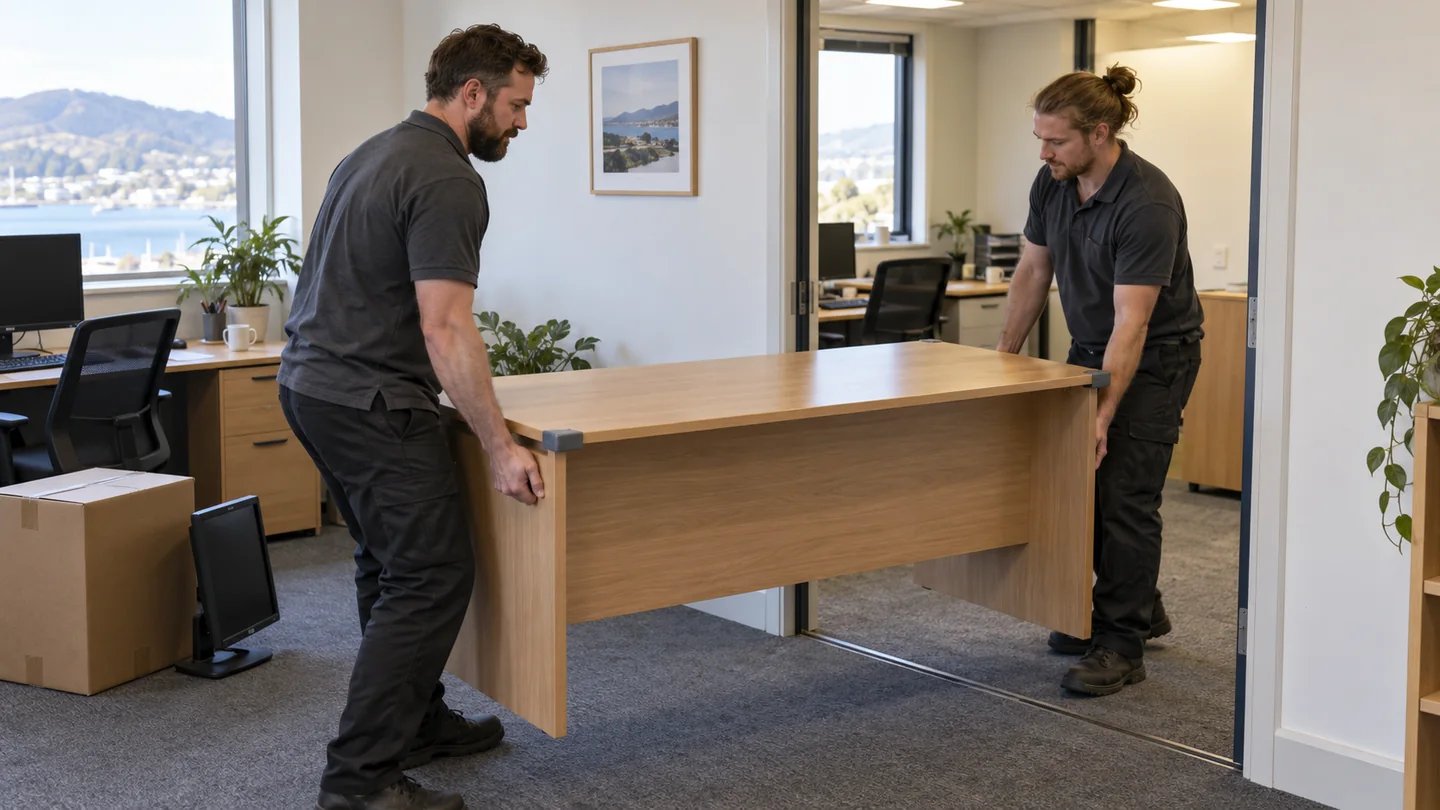
Move office furniture between rooms and floors
A meeting room becomes a team workspace. A new department needs the floor above. Or a fit-out means clearing several rooms while the business keeps operating. An internal office move needs a clear plan for the furniture, the people using the space and the route between rooms.
Tas Removals & Storage helps businesses move office furniture in Hobart, Launceston and other Tasmanian locations. Tell us which rooms or floors are changing and what needs to go where. We can work through the handling needed for desks, tables, cabinets and workstation relocation, starting with your item list and a simple destination layout.
You may need help for one meeting room, a group of workstations or a larger office rearrangement. Our Tasmania office and commercial removalists can also discuss packing and transport where part of the furniture is leaving the site. If you are moving the business to another address, use our office relocations within Tasmania guide alongside your enquiry.
Change rooms
Move desks, chairs, meeting tables and storage furniture into the rooms where they are now needed.
Change floors
Plan the lift or stairs, the furniture route and who will be available to direct placement.
Make room for work
Clear agreed areas for a refurbishment, then plan the return of furniture when the space is ready.
What office furniture are you moving?
Count the pieces rather than describing the job only as “a small office move”. Six desks with drawers, partitions and return sections are a different task from six lightweight tables. Photos help us see the furniture and any components that may need to come apart.
- Desks and workstations: note return sections, sit-stand mechanisms, attached drawers, screens and cable trays.
- Meeting and boardroom tables: provide dimensions and photos of the top, base and connections.
- Filing cabinets and cupboards: identify the contents, keys and whether the furniture is freestanding or fixed to the building.
- Reception and shared-area furniture: include seating, display units, shelving and items that must remain available during the move.
- Equipment and records: list printers, monitors, boxed files and desk contents separately from the furniture.
For furniture dismantling and reassembly, explain what needs to come apart and what you want ready afterwards. Send close-up photos of a boardroom table's connections or a desk's electrical controls before anyone starts undoing fittings. Our furniture dismantling and reassembly guide helps you identify the details the team needs.
List fixed shelving, wall-mounted equipment and other attached fittings separately, and agree their removal with the property manager and the appropriate trades. Mention safes or unusually heavy furniture early. These items need their own handling assessment, even when they are travelling only to the next room.
Give every item a destination before the first desk moves
A quick sketch is often enough to start. Mark the rooms, doorways and the intended position of larger pieces. Use room names or simple identifiers that everyone understands, such as “Level 2, accounts, desk A”. Put the same identifier on the item list and the furniture label.
Check that the new position works with doors, walkways and the connections your IT team needs. Include room for chairs to move and cupboards to open. Your office coordinator should approve the layout before the moving team begins, so a desk is placed once rather than shifted around while people decide.
Tell Tas Removals & Storage who can make placement decisions on the day. One nominated contact can resolve an unexpected fit problem, identify an item staying behind and confirm where priority furniture goes. Keep that person available during the agreed moving window.
For shared workspaces, identify whose belongings are included. Colleagues' laptops, confidential records and personal possessions should have clear owners and instructions. Our labelling and inventory guide can help you keep desk contents connected to their destination.
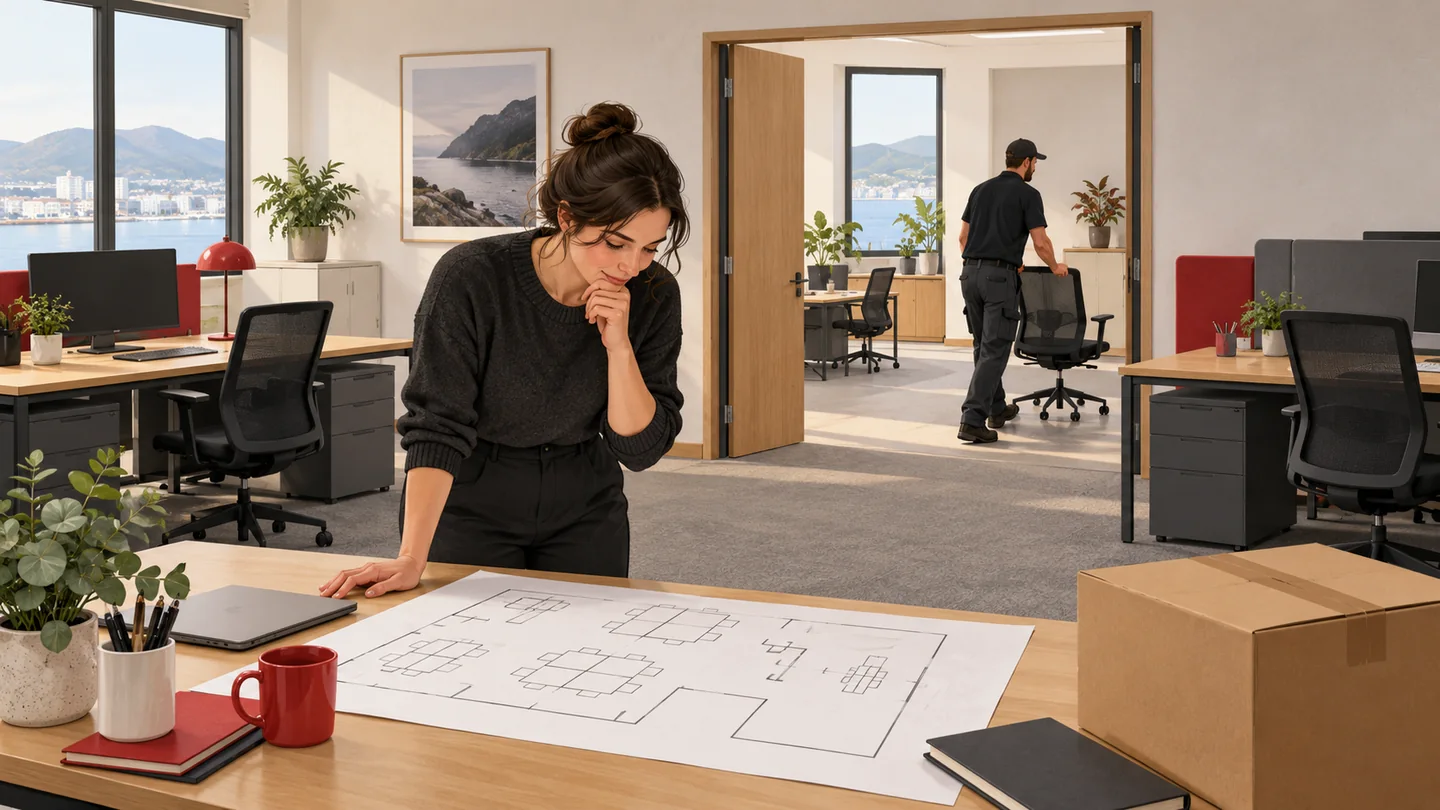
Check the whole route between office rooms and floors
Walking the route with an empty hand will not show every furniture problem. Measure the narrow doorway, the stair landing and the turning point where a long table has to change direction. Photograph these areas alongside the item itself. For multi-floor office removals, include lift entry dimensions and any restrictions your building manager provides.
Explain whether the furniture can stay inside throughout the move or needs to leave the building and enter elsewhere. Separate tenancies, locked corridors and changes in floor level can make the route less direct than the addresses suggest. Parking and loading access also matter if equipment or furniture is being collected for storage.
Before moving day, agree on building access, keys or security passes, permitted work times and protection for sensitive floors or finishes. Keep shared walkways and emergency access available. Tell us about occupied areas, client appointments and other contractors using the same space.
WorkSafe Tasmania's hazardous manual tasks code of practice explains why handling risks need assessment. The load, task and working environment matter together. Moving furniture a short distance does not remove the need for suitable handling and a clear route.
For an internal office move in Hobart or a Launceston office furniture move, the street address tells us only part of the story. Photos of shared entrances, stairs and room access show what the team will need to work around. Include the same details for enquiries in Devonport, Burnie and regional Tasmania.
Sequence the move around the people who still need to work
Start with the work that cannot stop. Reception may need a clear customer entrance, accounts may need access to particular files and a team taking calls may need its devices available until an agreed time. Identify these priorities before choosing the order of furniture movements.
A staged office rearrangement might begin with an empty room, move one team into it and release the next space. Another job might clear a meeting room first so it can hold packed desk contents while furniture is repositioned. Choose the order with your office coordinator, then confirm it with the moving team.
On a small screen, swipe or scroll sideways to read every column.
| Task | Who to coordinate with | What to confirm |
|---|---|---|
| Furniture and placement | Office coordinator and Tas Removals & Storage | Item list, furniture handling, destination rooms and move order. |
| Computers and connections | Your IT provider or responsible staff member | Shutdown, backups, cable identification, reconnection and testing. |
| Building access | Building or property manager | Keys, lift arrangements, work windows and shared access. |
| Records and personal items | Authorised staff | What stays with staff, what is packed and who receives it. |
| Furniture leaving the premises | Moving team and the receiving contact | Transport address, storage requirement and later delivery. |
If you need a weekend or outside-hours office move, include your preferred times in the first enquiry. Check the moving team's availability and the building's permitted hours together. Once the moving window is booked, arrange IT support and other contractors around it, especially if staff need the new layout ready the next day.
For a wider workplace transition, our business relocation checklist and office moving tips cover the surrounding preparation.
Prepare desk contents, IT equipment and files separately
Empty the agreed furniture before it is moved, label the contents and keep small fittings together. Ask how filing cabinet drawers and cupboard contents should be prepared for the particular job. A filled cabinet can be much heavier than it looks, and loose contents can shift when the unit changes position.
Have your IT contact arrange shutdown and disconnection. Identify each device and its cables before they are separated. Keep a record of which workstation receives them, and have the IT provider handle reconnection and checks. Furniture removals do not automatically include technical setup or work on fixed electrical connections.
The current Cyber.gov.au device security and backup guidance is useful when preparing computers. Have the person responsible for your business systems organise backups. Follow your organisation's rules for who may handle sensitive data and devices. Our office IT relocation checklist connects those tasks to the furniture move.
For packing assistance, identify the actual work: desk contents, archive cartons, fragile equipment or selected rooms. The packing and unpacking service can be discussed alongside your move. If surplus desks or cabinets will be kept for later, use our Launceston office furniture storage guide to plan inventory, collection and return requirements.
Example: ten workstations moving to the floor above
Imagine a team moving upstairs while reception remains on the ground floor. The job includes ten desks, ten chairs, two cabinets and boxed desk contents. It also needs a larger table moved into the room the team is leaving. This is an illustrative planning example, not a completed customer job.
The useful brief identifies the lift route and any furniture that will not fit intact, confirms the new room layout and names the person directing placement. Staff pack and label their agreed contents. The IT provider manages device preparation and the later setup. The furniture move follows an order that keeps the reception route clear.
That brief gives the moving team a clear picture of the job. “Ten desks upstairs” alone leaves out the cabinets, the table swap, the desk components and the people needed to make the new workspace ready.
Request an internal office moving quote
Send Tas Removals & Storage the premises address, a furniture list, photographs and a simple room plan. Tell us the floor each item is leaving and where it needs to go. Include access restrictions, preferred dates, packing help and any dismantling, transport or storage requirements.
Internal office moving costs depend on the furniture's size and weight, preparation, access, handling and moving window. Check that your quote lists the packing, dismantling and placement you have asked for. Ask how extra items or a change of layout would affect the price before adding them to the job.
Start with the outcome you need: a meeting room ready for use, a team moved to another floor or furniture cleared before a refurbishment. We can then discuss the practical work around it. Call 03 6343 4698 or request an office moving quote.
Questions about internal office moves
Do I need a truck for an internal office move?
A room-to-room move may stay entirely inside the premises. Furniture going to storage, another building or a separate entrance can require transport. Tell us the route and what is leaving the site so we can plan the furniture handling and any transport needed.
Can you move office furniture between floors?
Send an item list and photos of the furniture, stairs, landings and lift access. Include building restrictions and destination rooms. The team will need to check the route and handling before confirming which tasks can be included in your quote.
Can I book help for only part of the office?
Describe the meeting room, workstation group or selected furniture you need moved. Identify the surrounding areas that remain occupied, the destination layout and your preferred timing. A focused item list makes a partial office moving enquiry useful.
Do furniture removals include computer disconnection and IT setup?
Arrange device shutdown, backups, disconnection, reconnection and testing with your IT provider or responsible staff member. Furniture handling and packing do not automatically include technical setup or work on fixed electrical connections.
Should filing cabinets be emptied before the move?
Tell the team about the cabinet, its contents, dimensions and route, then ask how it should be prepared. Follow your organisation's rules for confidential records. Do not assume a filled cabinet is suitable to move just because the destination is nearby.
Is office furniture dismantling and reassembly included?
Identify the desks, tables or other furniture that may need dismantling, and say what you want reassembled at the destination. These tasks and any exclusions should be confirmed in the quote. Fixed fittings may need property-manager or trade arrangements.
Can an internal office move be arranged outside normal working hours?
Include your preferred times in the enquiry. We will need to check availability, and your building manager needs to confirm permitted access. Once the moving window is booked, arrange IT support and other contractors around it.
What information is needed for an internal office moving quote?
Provide the premises address, item list, photos, start and destination rooms or floors, access details and preferred dates. Add packing, dismantling, storage or transport requests, plus the contact who can direct furniture placement.
Plan your office furniture move with Tas Removals & Storage
Tell us which rooms are changing, what needs to move and when the space must be ready. Send the item list, access photographs and destination plan so we can discuss the work involved.
Prefer email? Send your item list and photographs to info@tasfurnituretransport.com.au.
Useful services and moving guides
Office and commercial removals
Moving furniture and workplace contents across Tasmania.
Office IT checklist
Join device preparation and reconnection to the move.
Office furniture storage
Plan the furniture that needs to leave the premises.
Prepared for Tas Removals & Storage, 14 October 2026. Official resources linked in this guide were checked during preparation.